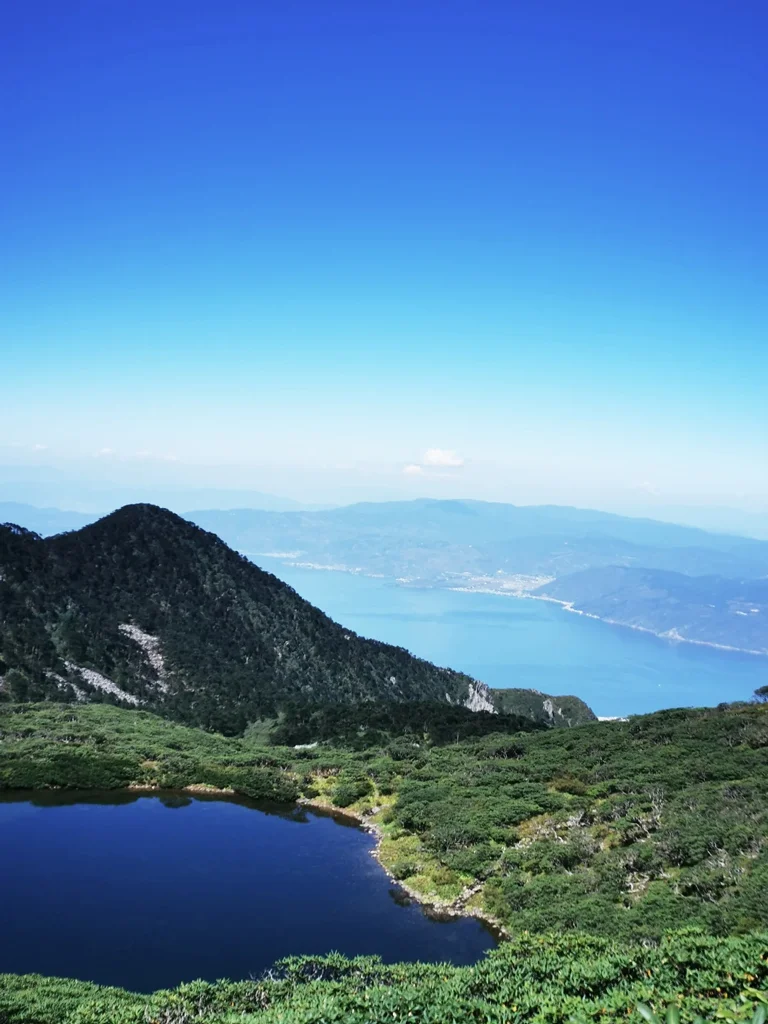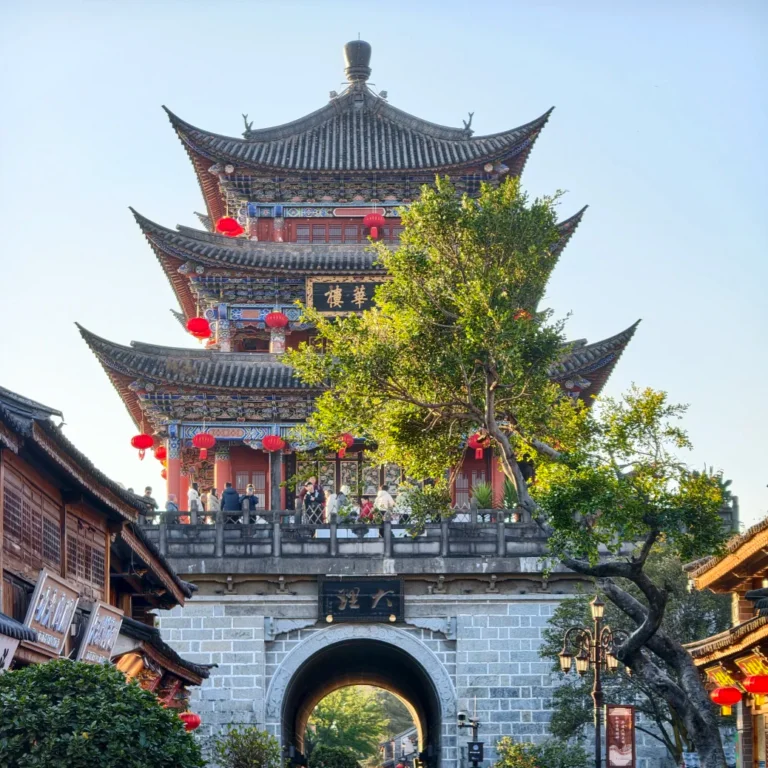












At the foot of Cangshan Mountain, on the shores of Erhai Lake, lies a secret Buddhist paradise gently caressed by the passage of time ——The Three Pagodas of Chongsheng Temple in Dali. This is the royal monastery of the Nanzhao Kingdom, where three ancient pagodas have stood silently for a thousand years. With Cangshan Mountain as their backdrop and Erhai Lake as their mirror, they weave a flowing Buddhist panorama of time and faith. Morning mist, the rising sun, the glow of dusk, and moonlight—every moment holds a different surprise; the ancient temple, the shadows of the pagodas, the sounds of Zen chanting, and the scent of incense—every element exudes the pure fragrance of faith. Stepping into the Three Pagodas of Chongsheng Temple in Dali, you leave the hustle and bustle of the city far behind, and embark on a healing journey—a gentle encounter with a millennia-old Buddhist realm, where the shadows of the pagodas mingle with the morning light. Here, anyone yearning for the essence of Zen can find solace amidst these pagoda shadows, setting aside all inner restlessness and longings.
Table of Contents
- Hours: 8:00 a.m.–6:00 p.m. (last admission at 5:30 p.m.). Open year-round with no closing days. Visiting hours for the interior of the temple are 8:30 a.m.–5:00 p.m.; please plan your visit accordingly.
- Recommended duration: 2–3 hours. This can be adjusted based on your interest in cultural experiences; visiting temples, listening to guided tours, and taking photos may extend the time accordingly.
- Admission Fees: Admission to the Chongsheng Temple Three Pagodas Scenic Area is 121 yuan per person (includes viewing of the Three Pagodas and a tour of Chongsheng Temple); the round-trip scenic area shuttle bus costs 20 yuan per person (optional); incense and candles for prayer within the temple may be purchased voluntarily; there are no mandatory purchases.
- Eligibility for Discounts: Seniors aged 70 and older, people with disabilities, and active-duty military personnel are admitted free of charge; Seniors aged 60–69, minors aged 6–18, and full-time students under 24 are eligible for half-price admission. Your entry permit may be used as proof of eligibility, and our tour guides can assist with applying for these discounts to ensure you enjoy these benefits without any issues.
- Best time to visit: 8:30–11:30 a.m.—it’s cool, less crowded, and the light is soft, making it ideal for taking your time to appreciate the ancient architecture and offer prayers; From 1:30 PM to 4:00 PM, you can enjoy the scenic view of the Three Pagodas against the backdrop of Cangshan Mountain, which offers excellent photo opportunities; avoid visiting during the hottest part of the day at noon.
Why Should Tourists Definitely Visit the Three Pagodas of Chongsheng Temple in Dali?
- 1. A cultural landmark of Dali and a must-visit photo spot—the sight of the Three Pagodas standing side by side is a classic symbol of Dali. Almost every tourist who visits Dali stops by to take photos here; it is the most talked-about cultural attraction in Dali online and a must-see destination for anyone wishing to understand Dali’s millennia-old history and culture.
- 2. A unique blend of culture and architecture—experience both the serene and solemn atmosphere of a thousand-year-old Buddhist temple, the profound heritage of Buddhist culture, as well as the exquisite craftsmanship of ancient brick pagodas. Visitors can admire the charm of these historic structures while listening to the guide recount the millennia-old legends of the Three Pagodas—making this an ideal destination for culture enthusiasts.
- 3. A stress-free itinerary suitable for all ages—the scenic area’s trails are gentle, with no steep slopes and no risk of altitude sickness. The entire route can be covered on foot or by scenic area shuttle bus, and there are plenty of rest areas, so seniors, children, and visitors with limited stamina can easily manage the trip. Our tour guides will adjust the pace of the tour based on your stamina.
- 4. Flexible itineraries that are easy to combine, making planning a breeze—thanks to our prime location, we’re within easy reach of Dali Old Town, Cangshan Mountain, and Erhai Lake. You can easily incorporate these three major attractions into your itinerary. Whether you’re joining a group tour or opting for a customized trip, we’ll provide full assistance with itinerary planning and document processing throughout your stay, so you can travel worry-free.
The Silhouette of a Millennium-Old Pagoda at the Foot of Cangshan: Encountering Dali’s Buddhist Poem
The Shadow of the Pagoda Reflected on the Divine Path: A Solemn Prelude at the Gates of the Buddha’s Realm
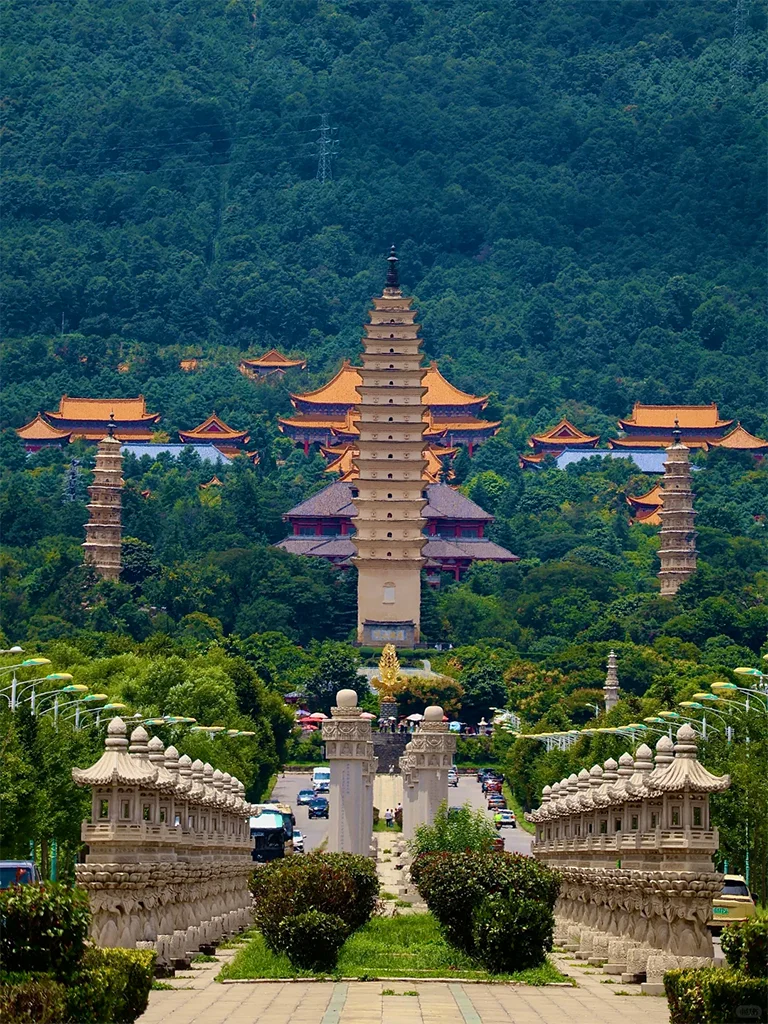
Stone sutra stupa are neatly arranged on both sides of the sacred path, drawing the eye toward the main pagoda in the distance, becomingThe Three Pagodas of Chongsheng Temple in DaliThe most solemn prelude. The stupa at the center of the sacred path is engraved with sutras; when the wind blows, it seems as though one can hear the sound of sutra recitation echoing across a thousand years. The buildings on either side are symmetrical and dignified, their simple, ancient stone structures blending seamlessly with the Cang Mountains in the distance. At the end of the sacred path, the main pagoda stands majestically, flanked by two subsidiary pagodas on either side; the tiered eaves of the pagodas stand out vividly in the sunlight. In the distance, the Cangshan Mountains stretch like a dark-blue ribbon, with layer upon layer of peaks; the golden roof of the ancient temple is hidden amidst the sea of trees, blending seamlessly with the green of the Cangshan Mountains and the yellow of the ancient pagoda to form a breathtakingly beautiful scene known as “The Shadow of the Pagoda on the Cangshan Mountains.” Standing on the sacred path, with stone slabs smoothed by the passage of time beneath your feet and rustic sutra stupa by your side, you look up to behold the majesty of Cangshan Mountain and the solemnity of the ancient pagodas. A faint scent of incense fills the air, instantly calming the mind and allowing one to experience the solemnity and sanctity of the Three Pagodas of Chongsheng Temple in Dali.
Three Pagodas Overlooking Erhai Lake: A Spectacular View Where the Pagodas' Silhouettes Are Reflected in Cangshan Mountain
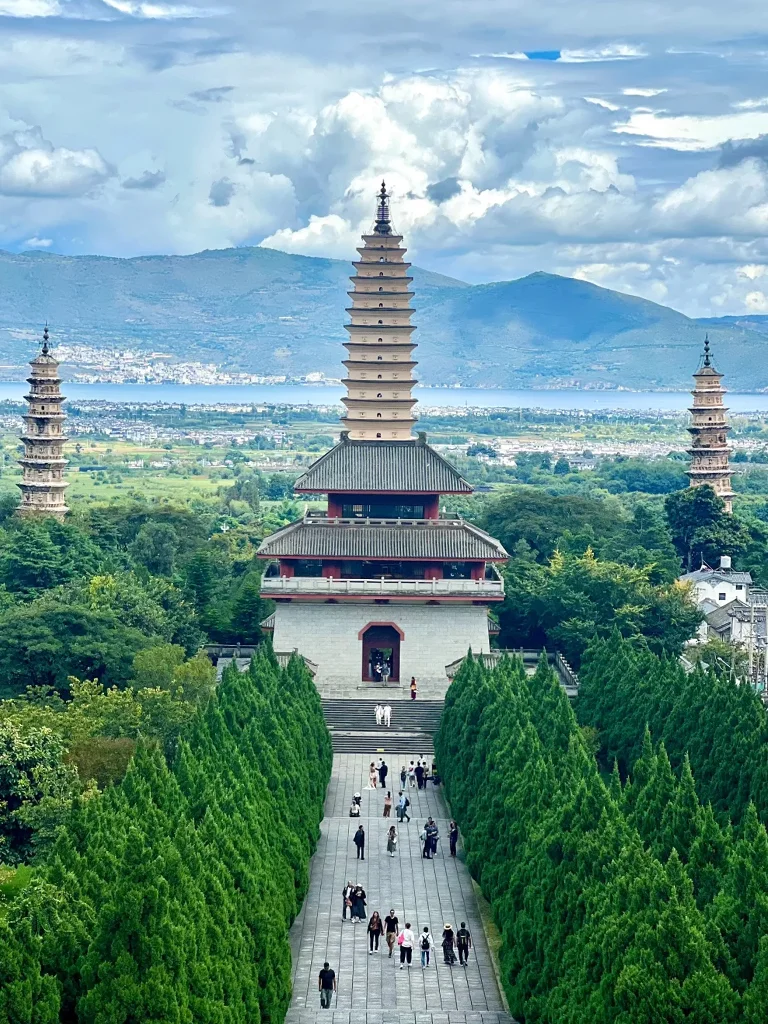
Set against the backdrop of Cangshan Mountain and Erhai Lake, the three ancient pagodas appear exceptionally simple and serene, becomingThe Three Pagodas of Chongsheng Temple in DaliThe most iconic scenery. The main pagoda stands majestically, flanked by two smaller pagodas on either side; the tiered eaves of the pagodas stand out clearly against the blue sky and white clouds. Behind the pagodas, the Cangshan Mountains stretch out in rolling undulations; the verdant peaks echo the blue waters of Erhai Lake, creating a breathtaking panorama of “Cangshan and Erhai, accompanied by the Three Pagodas.” The surrounding forest is lush and verdant, with the fresh scent of pine trees permeating the air, while the melodious chimes of the ancient temple’s bells drift through the air, imbuing the entire scene with a sense of Zen tranquility. Standing on the observation deck and gazing into the distance, the majesty of Cangshan Mountain, the vastness of Erhai Lake, and the ancient charm of the Three Pagodas blend into one, with every view forming a stunning landscape painting. This is Dali’s iconic landmark and the quintessential representation of the Three Pagodas of Chongsheng Temple. Every traveler who comes to Dali pauses here to experience the millennia-old charm and romantic allure at the foot of Cangshan Mountain.
A cluster of ancient buildings with resplendent golden roofs—relics of the golden age of the Nanzhao Buddhist Kingdom
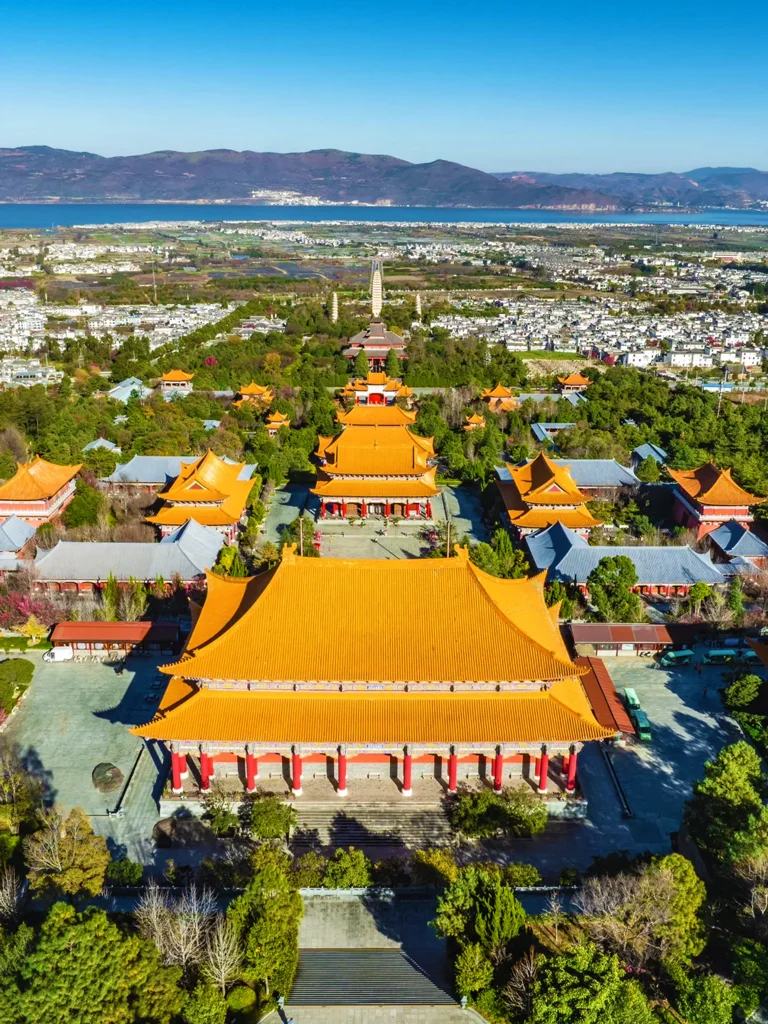
The ancient architectural complex of Chongsheng Temple stretches out at the foot of Cangshan Mountain, its golden roofs shimmering brilliantly in the sunlight, becomingThe Three Pagodas of Chongsheng Temple in DaliThe most spectacular sight. Centered around the Great Buddha Hall, the entire complex features tier upon tier of halls built along the mountainside. With their red walls and golden tiles, they exude a majestic grandeur, as if bringing the glorious Buddhist splendor of the thousand-year-old Nanzhao Kingdom back to life before our eyes. The upturned eaves, the colorful murals beneath the eaves, and the relief carvings on the walls—every inch of detail reveals the artisans’ meticulous craftsmanship. Surrounded by lush forests, with the peaks of Cangshan Mountain faintly visible in the distance, the golden roofs of the ancient temple echo the landscape, creating a magnificent panorama. Stepping inside the ancient temple, the air is filled with the scent of incense, and the melodious tolling of the bell drifts through the air, instantly transporting visitors far from the hustle and bustle of the outside world. Chongsheng Temple is not merely a complex of ancient buildings; it is a hidden Buddhist paradise at the foot of the Three Pagodas of Dali, bearing witness to the passage of time in Dali’s Buddhist culture and the Cangshan Mountains. Here, every traveler can experience the solemnity of the Buddhist realm and the gentle beauty of the Cangshan Mountains.
The Majestic Great Buddha Hall: A Millennium-Old Zen Hall at the Foot of Cangshan Mountain
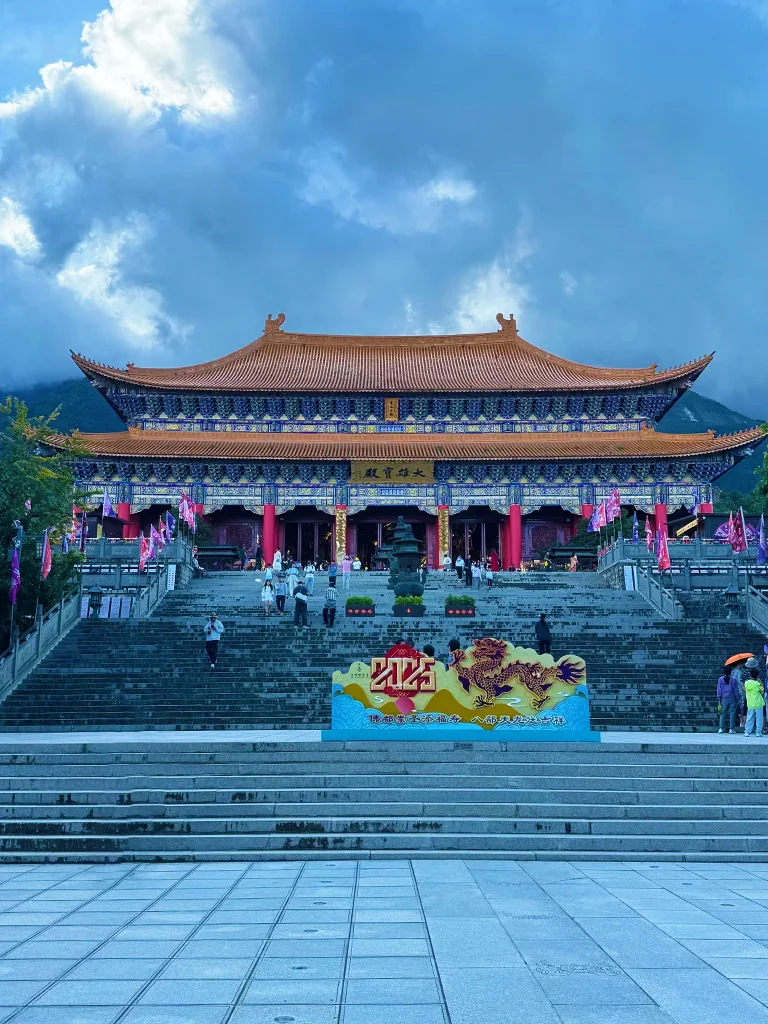
The Great Buddha Hall of Chongsheng Temple stands majestically at the foot of Cangshan Mountain, serving asThe Three Pagodas of Chongsheng Temple in DaliThe most breathtaking sight. The temple complex is majestic, with its golden roofs, vermilion columns, and blue murals—every detail exudes the grandeur of an imperial monastery. The stone steps in front of the hall’s entrance are wide and straight; as visitors walk up them at a leisurely pace and look up, they are met by the majestic hall, as if they have stepped into an imperial Buddhist realm from a thousand years ago. In the distance, Cangshan Mountain is shrouded in mist, appearing and disappearing intermittently, echoing the golden roof of the hall and creating a breathtaking panorama of the “Buddhist Kingdom of Cangshan.” Stepping inside the hall, the solemn and majestic Buddha statues, the wispy incense smoke, and the resonant tolling of the bell fill one’s heart with reverence and tranquility. The Great Buddha Hall is the central structure of Chongsheng Temple and the heart of the Buddhist realm at the foot of the Three Pagodas of Dali’s Chongsheng Temple. Every brick and tile here embodies Dali’s Buddhist culture and the historical layers of Mount Cangshan, allowing every traveler who comes here to experience the solemnity of the Buddhist realm and the gentleness of Mount Cangshan.
→ Click here to see more Dali itineraries and activities
As the shadow of the Four Seasons Pagoda shifts with the seasons, we set out to fulfill a millennia-old promise in the Buddhist realm.
The Three Pagodas of Chongsheng Temple in Dali are a timeless, exquisite masterpiece that has retained its beauty for a thousand years. The scenery varies with the seasons: in spring, azaleas frame the pagodas; in summer, a cool breeze sweeps through the forest; in autumn, the ancient pagodas are reflected in the misty lake; and in winter, snow-white hues evoke the ink-wash aesthetics of Zen. As the moonlight shifts at dawn and dusk, the pagodas cast ever-changing, enchanting shadows.
Stroll along the sacred path within the temple, gaze upon the vast scenery of the Blue Lake, listen quietly to the bells of the ancient temple, and immerse yourself in the Zen ambiance of this Buddhist realm. The Three Pagodas are not merely millennia-old structures; they are also a symbol of faith, embodying the ancient wisdom of harmony between humanity and nature. Step into the Three Pagodas of Chongsheng Temple to fulfill a rendezvous with the Buddhist realm; amidst the shifting shadows of the pagodas, encounter a sense of tranquility and pure beauty.
Luxury Accommodations, Unique Attractions, Dali. Photographed at Dali Flower…
Premium Accommodations, Unique Attractions, Kunming Attractions, Kunming Stone Forest Scenery…
Luxury Accommodations, Unique Attractions, Kunming Attractions—Immerse Yourself in "The World’s…
→ Contact Us and Join Us on a Journey of Discovery
"Customized for Tourists | Your Shuhe, Your Way! Adjust the pace of your itinerary, choose your accommodations, and select nearby attractions."
"We specialize in travel services for visitors to mainland China. With years of experience, we focus on group tours and customized trips to attractions in Yunnan, particularly Lijiang. There are no hidden fees, so visitors can enjoy their trip to mainland China with greater peace of mind."
Local Food & Accommodation Recommendations
- Local Cuisine: Dali wild mushroom hot pot, Bai-style cold dishes, milk fan and shaqima, Yunnan-style liangfen, and crossing-the-bridge rice noodles. The flavors are mild, and the spiciness can be adjusted to suit your preference. There are many specialty restaurants and food stalls at the entrance to the scenic area and in the surrounding area, with transparent pricing, where you can sample local delicacies.
- Accommodation Options: You can choose from unique guesthouses in Dali Old Town, leisurely inns near the Three Pagodas of Chongsheng Temple, or boutique hotels in the city center—select based on your budget. For travelers who prefer a quiet setting and want to explore nearby attractions, we recommend guesthouses near the Three Pagodas, which offer a serene environment, are close to the scenic area, and provide convenient access to attractions.
- Our Itineraries: Group tours include carefully selected, licensed accommodations; for customized itineraries, you can choose from traditional-style guesthouses, cultural inns, or luxury resorts based on your preferences, paired with distinctive dining experiences. There are no hidden fees throughout the trip, and meal plans can be adjusted to accommodate your dietary preferences.
Important Notes
- You must bring your entry certificate with you to enter the park, purchase discounted tickets, and check in at your accommodation. Be sure to keep it with you at all times. Our tour guide will assist with the verification process, so there’s no need to worry about any procedural issues. The entry certificate can be used in place of your ID card, ensuring a smooth experience throughout your trip.
- Out of respect for local Buddhist customs, when entering Chongsheng Temple, please remove your hat, remain quiet, avoid making noise or running around, and do not touch the Buddha statues, ritual objects, or historic buildings without permission; do not use a flash when photographing Buddha statues, and do not take photos of monks without permission; When offering prayers, follow the temple’s guidelines; do not burn incense indiscriminately or scatter incense ash carelessly.
- Please refrain from picking plants, defacing property, or damaging cultural relics within the scenic area, and help preserve the ancient temple and the scenic area’s environment. When visiting the museum, please do not touch the artifacts or use a flash when taking photos, and follow the museum’s rules.
- Before making any purchases—such as shopping, buying incense and candles, or taking photos—we recommend asking for prices in advance to avoid unexpected additional charges. Avoid “low-price tickets” and unlicensed taxis offered by street touts; book through our travel agency for full price transparency and no hidden fees.
- There are plenty of rest areas throughout the scenic area, so you can take a break whenever you get tired from walking. If you feel unwell, please let your tour guide know right away; we will provide emergency assistance and will accompany you throughout the tour with first-aid supplies.
Frequently Asked Questions
Where is the best spot to take photos of the Three Pagodas at Chongsheng Temple?
The most iconic spot for photography is the Juying Pool, where the water perfectly reflects the Three Pagodas and Cangshan Mountain; Next are the sacred path in front of the temple and the observation deck north of the pagoda complex, which offer panoramic views of the Three Pagodas, Cangshan Mountain, and Erhai Lake; if you want to capture the golden roofs at sunset, the platform of the Great Hall of the Buddha is the ideal spot, as it offers soft lighting and an unobstructed view.
Are there any etiquette rules or visitor guidelines to be aware of at the temple?
Chongsheng Temple is a Buddhist sacred site. Please remain quiet when visiting the main hall and refrain from loud talking; dress appropriately and avoid revealing clothing; do not touch or climb on the Buddha statues inside the hall; incense sticks are available for visitors to take voluntarily, but please do not light them in no-smoking areas.
Is it easy to get to and park near the Three Pagodas of Chongsheng Temple?
The scenic area is about 1.5 kilometers from Dali Old Town. You can take Bus No. 19 directly there, or ride an electric scooter or take a taxi. The scenic area has a large parking lot with a fee of about 10 yuan per visit, and a free shuttle runs from the parking lot to the temple gate, making it very convenient for those traveling by car.
What is the best season or time of day to visit the Three Pagodas of Chongsheng Temple?
The dry season from November through April is the best time to visit, when the sky is clear and blue and the Cang Mountains are sharply defined, offering excellent conditions for photographing the reflections of the Three Pagodas. We recommend visiting in the early morning or late afternoon, when there are fewer tourists and the light is soft—this allows you to avoid the crowds while capturing stunning shots of the pagodas’ reflections against the Cang Mountains.