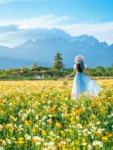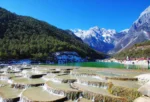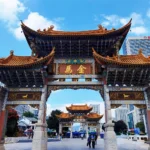












In a corner to the northwest of Shangri-La, just eight kilometers from the city center, lies a hidden paradise cherished by heaven and earth—the Napahai Yila Grasslands. In Tibetan, Napahai means “the lake behind the forest.” This magical land uses the seasons as its brush, the four seasons as its ink, and the mountains and waters as its canvas, blending the lake and the grasslands into a single entity. In summer, its rippling emerald waves weave a poetic tapestry, In summer, it is a lake with rippling emerald waters; in winter, it becomes a vast, boundless meadow—creating the unique and extraordinary spectacle of “lake and grass coexisting.” This is the very essence of the Napa Hai Yila Grassland’s captivating spirit. Located at an altitude of 3,266 meters and surrounded on three sides by mountains, with snow-capped peaks serving as a natural screen, with water and grass as its carpet, cattle and sheep as its ink, and prayer flags as its melody. Every inch of land is imbued with the purity and gentleness of the plateau, and every breeze carries the leisurely rhythm and poetry of pastoral life. As Shangri-La’s most healing natural sanctuary, the Napa Hai Yila Grassland is not only an internationally important wetland and a wintering home for migratory birds such as the black-necked crane, but also a distant refuge in the hearts of countless travelers—a place to escape the clamor and find peace. Step inside. Stepping into this place is like stepping into a gentle rendezvous with the lake’s glow, the grasslands’ hues, faith, and the glow of campfires—a journey that spans mountains and seas, where you finally find a place to call home.
Table of Contents
Ticket and Opening Hours Information
- Ticket Information: Clearly state the admission prices for key attractions, distinguish between free and paid attractions, align with visitors’ spending habits, and provide key tips to help them avoid pitfalls:
- Free Areas: Napahai Yila Grassland itself is open to the public free of charge. The lakeside road, most viewing platforms (such as the Alpine Botanical Garden viewing platform), and the Tibetan village are all free to visit, and you are welcome to explore and take photos at your leisure;
- Fees: An environmental maintenance fee of 30 yuan per person may be charged for entry to certain scenic spots (such as the “Shangri-La Yila Grassland Ecotourism Area”), which includes parking and basic guided tour services; separate fees apply for experiential activities such as horseback riding, Tibetan costume rentals, and stargazing camping;
- Tip to Avoid Pitfalls: Be wary of the “Napa Lake Scenic Area Ticket Office” (40 yuan admission) recommended by drivers or people on the side of the road—it is actually a private horse ranch. The entire loop road around the lake is free of charge; there is no need to purchase such tickets;
- Overall Information: The attraction is open year-round with no closing times; the best time to visit is from 8:00 a.m. to 6:00 p.m. (subject to slight adjustments depending on the season);
- Best times to visit: Sunrise (6:30–7:30) to photograph the morning mist over the grasslands and the reflections of snow-capped mountains; sunset (6:00–7:00 PM) to capture the golden grasslands and smoke rising from Tibetan homes; for stargazing, choose a moonless night (the grasslands outside Yila Village are ideal);
- How to Purchase Tickets: The environmental protection fee can be paid on-site without a reservation; for activities (such as horseback riding and camping), you can negotiate prices on-site or book in advance through a travel agency to avoid hidden charges;
- Parking Information: Free parking is available at locations such as the Alpine Botanical Garden and the White Pagoda in Napa Village. If you’re driving, you can simply use your GPS to navigate directly to the respective attractions. During peak season, we recommend taking a taxi or hiring a private car to avoid parking congestion;
- Exclusive Benefits for Travel Agencies: Mention “Group tours include an environmental preservation fee and one-stop service for all activities—no need to purchase tickets separately or haggle over prices, saving you time and hassle; Customized tours allow for off-peak itinerary planning, seasonal adjustments to activities, professional guides, altitude sickness protection, and tips for avoiding pitfalls when horseback riding," emphasizing that there are no hidden costs.
Why is Lake Napa a must-see for tourists?
- Highlight 1: A unique seasonal double spectacle—during the rainy season (May–October), the lake swells to form a “mirror of the sky”-like plateau lake, with a road crossing the water, making it feel as if you’re sailing; During the dry season (November–April), the lake recedes, giving way to vast golden grasslands dotted with herds of cattle and sheep. It serves as a wintering ground for rare migratory birds such as the black-necked crane. Each season offers its own unique charm, ensuring a delightful experience no matter when you visit. Our guides will plan the best itineraries and photography tips based on the season of your visit;
- Highlight 2: A Soothing, Leisurely Lake-Circuit Tour—The lake-circling road is free of charge throughout the entire route, and you can explore it by bike, car, or sightseeing bus. Free viewing platforms are set up along the way, offering a new vista at every turn—you can take in panoramic views of the grasslands, photograph the white stupa and prayer flags, and and encounter herds of livestock. It’s perfect for travelers who enjoy a slow pace and want to relax and unwind. Our guided tours include transportation around the lake, and our tour guides will lead you to the best photo spots, helping you avoid taking detours;
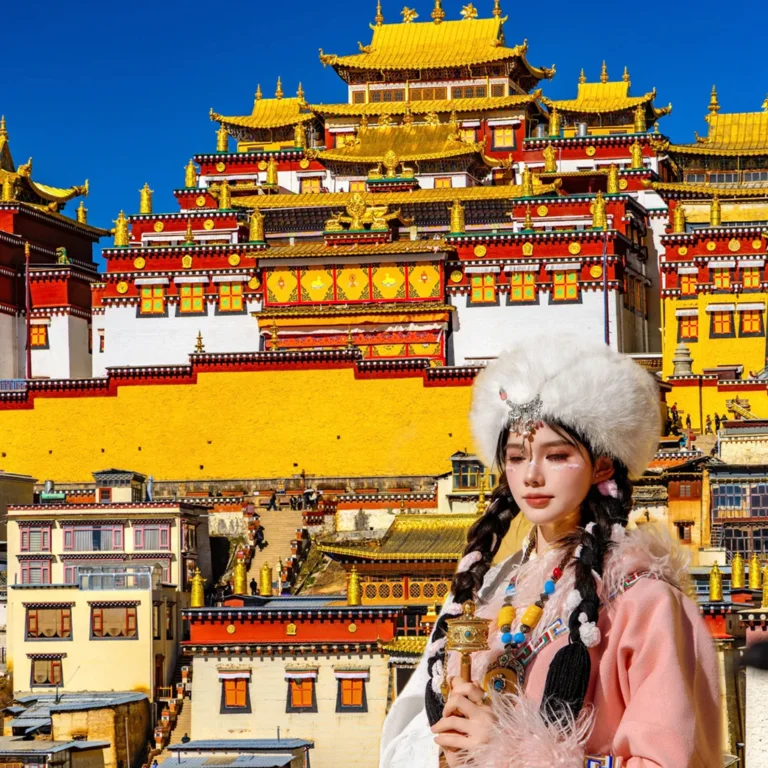
- Highlight 3: Immersive Tibetan Nomadic Experience—You can go horseback riding across the grasslands at Yila Ranch while listening to Tibetan guides recount legends of the grasslands and sacred mountains. You can also visit Tibetan villages to participate in activities such as herding, weaving tsampa, and making butter tea, experiencing Tibetan life from horseback. rent traditional Tibetan attire to take stunning photos on the grasslands and immerse yourself in the rich Tibetan culture. Our guides will provide tips on how to avoid pitfalls when horseback riding and assist with booking licensed riding stables to prevent hidden fees;
- Highlight 4: Low difficulty and easy to participate in, suitable for everyone—the altitude is relatively moderate (3,266 meters), the risk of altitude sickness is low, and there is no need for strenuous hiking. Depending on your fitness level, you can choose to bike, ride in a vehicle, or go on a light hike. making it easy for seniors and children to participate. It can be combined with other attractions such as the Old Town of Dukezong, Songzanlin Monastery, and Pudacuo National Park. Whether you choose a group tour or a customized tour, the pace of the itinerary can be flexibly adjusted. We provide round-trip transportation, altitude sickness support, and ticket booking services, saving travelers the hassle of planning, with no hidden fees throughout the trip.
A First Encounter with a Hidden Gem: Discover the Beauty of the Symbiosis Between Lake and Grass at Napahai
Morning mist spreads gently; verses of the prairie in the soft light
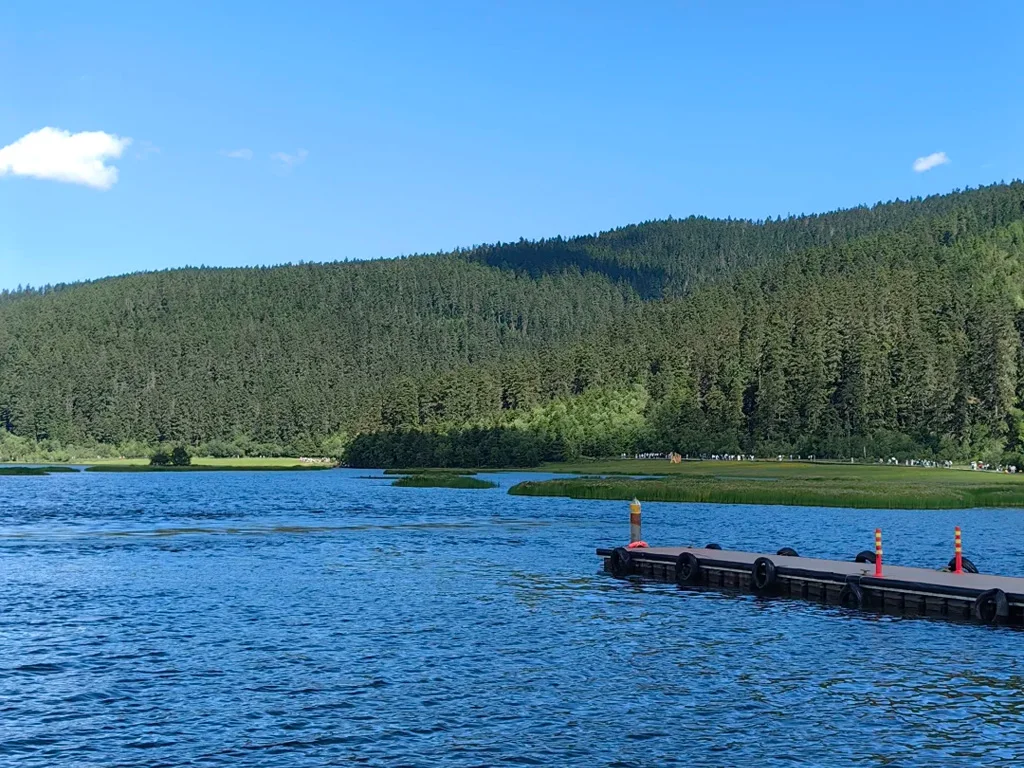
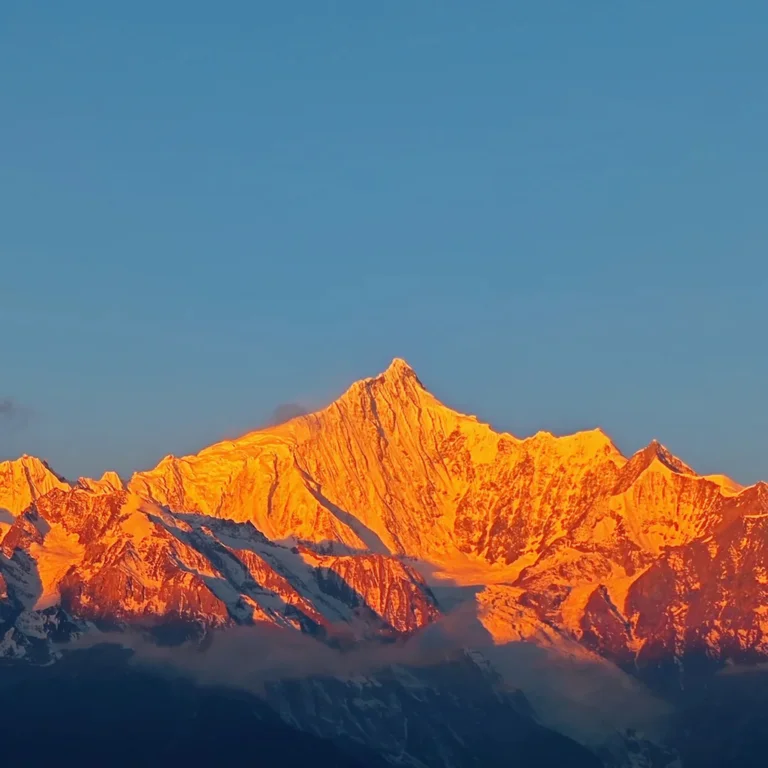
At dawn on the Napa Lake Yila Grasslands, a light mist hangs like gauze, infusing the landscape with poetic charm. It seems as though everything in the world has yet to awaken from its slumber, and all creatures remain immersed in a peaceful, unbroken dream. As dawn breaks, the pale blue horizon slowly and gradually sheds its haze, The first rays of morning light pierced through the clouds, gently showering the vast expanse of land below and bathing it in a soft, hazy glow. A thin mist, like light gauze or drifting clouds, wound its way between the meadows and the lake’s surface, transforming the distant Shika Snow Mountain into a hazy ink-wash painting with faint, pale hues, The snow on the mountain peaks glows with a faint, delicate silver sheen in the soft light, gently echoing the emerald-green grass beneath our feet—one cold, one warm, each in perfect harmony, melting into one another. Crystal-clear morning dew still clings to the blades of grass nearby, refracting the morning light like scattered diamonds on a jade-green carpet—twinkling specks of light, gentle and enchanting. A few yaks, shrouded in the morning mist, leisurely lower their heads to nibble on the tender green grass, their hooves gently tread the grass, leaving faint imprints; occasionally they lift their heads and swish their tails, breaking the early morning stillness yet adding a touch of vitality and liveliness. The lake’s surface is as calm as a mirror of lapis lazuli, reflecting the hazy snow-capped mountains, the soft mist, and the first light of dawn. The water and sky merge, reality and illusion intertwine, as if all the tenderness in the universe were gathered here in this hidden paradise. In this moment, there is no urban clamor, no worldly restlessness—only the morning light, the thin mist, the shimmering lake, the hue of the grass, and the soft murmurs of cattle and sheep. The Yila Grassland by Lake Napahai welcomes every traveler who comes here with the gentlest of gestures, filling one’s heart with joy, willingly losing oneself in the tranquility and poetry of this early morning, reluctant to awaken from this poetic reverie.
The sunshine is just right, and the plateau, adorned with a tapestry of colors, is teeming with life.
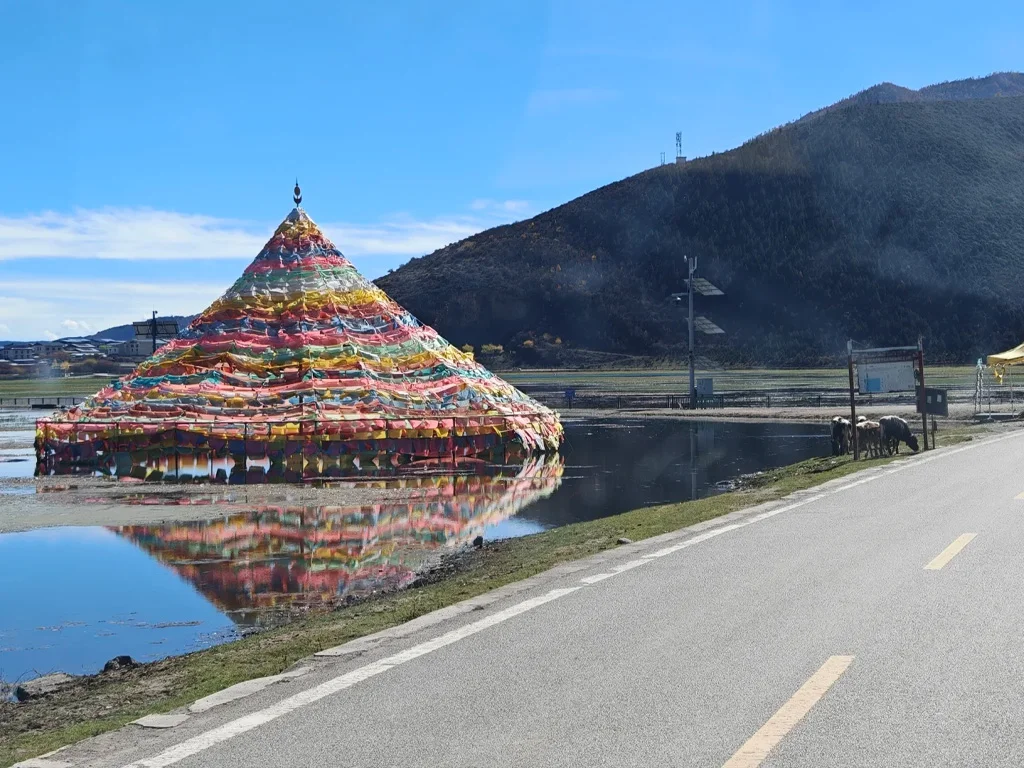
Under the midday sun, the Napa Haiyila Grasslands stretch out beneath a crystal-clear sky, their lush greenery spreading out in every direction, with every inch of land brimming with vibrant vitality and boundless poetry. The blazing sun hung high in the sky, and the crystal-clear blue sky, free of even a trace of impurity, resembled a sapphire smoothed by the passage of time, gently enveloping this vast meadow and casting a clear, luminous glow over everything between heaven and earth. At this moment, the Napa Lake Yila Grassland has shed the haze of the early morning, fully revealing its vitality and vastness. The emerald-green meadows stretch for a thousand li, extending all the way to the distant mountains. Where the wind blows, waves of grass surge, like gentle ripples on a blue lake, carrying the fresh sweetness of grass and the fragrance of the earth to greet you—like gentle ripples on a blue lake, carrying the fresh sweetness of grass and the fragrance of the earth to greet you—as if right in the heart of the beholder. The grasslands are dotted with all manner of unnamed wildflowers—pink, yellow, and purple—scattered like stars, blooming freely. Unassuming yet radiating a quiet joy, they add a touch of liveliness and splendor to this emerald carpet, as if nature had casually scattered shards of color across the landscape. Prayer flags by the lakeside flutter gently in the breeze. The five-colored scriptural texts—red, blue, white, green, and yellow—glisten in the sunlight, swaying slowly with the wind, as if narrating millennia-old prayers and blessings, embodying the purest faith of the Tibetan people. A few fine horses stroll leisurely across the meadow, now lowering their heads to graze, now raising their eyes to gaze into the distance, their manes fluttering in the breeze, fully embodying a sense of freedom and ease. In the distance, Tibetan-style wooden houses are artfully scattered about, with wisps of smoke curling upward from their chimneys. Together with the blue sky, white clouds, green grass, wildflowers, and the azure lake, they form a breathtaking pastoral scene of the plateau—one that compels visitors to pause and contemplate, quietly immersing themselves in this purity and vastness. to feel the unique healing power of the Napa Lake Yila Grasslands, allowing your weary body and mind to find solace, and letting the soothing, restorative energy of the lush greenery bring relief to your tired body and soul.
A Serene Journey Through Tibetan Lands: Walking Along the Lake, Surrounded by Scenic Views
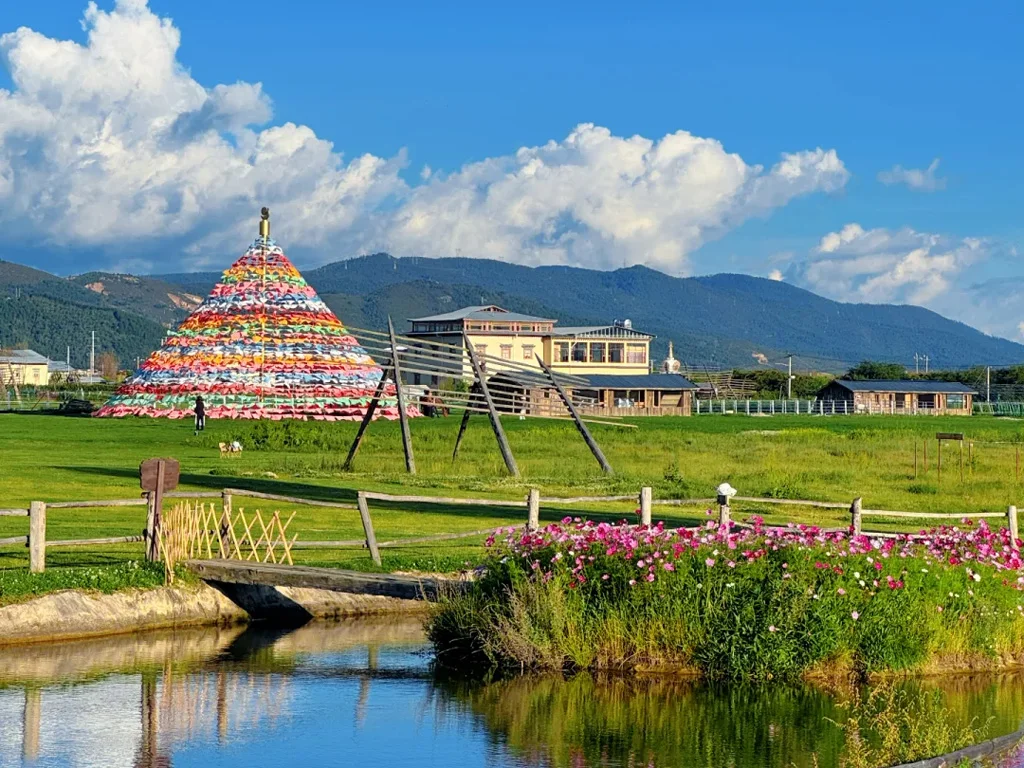
The Napahai Yila Grassland, situated alongside the lakeside highway, blends seamlessly with the roadscape; as you walk, the scenery changes with every step, offering unexpected surprises at every turn. The winding lakeside road, like a silver ribbon, gently winds through the embrace of the Napa Haiyila Grasslands—with vast, boundless meadows on one side and a crystal-clear lake on the other. The road and the scenery blend seamlessly, and the scenery and the heart are intertwined, as if you were walking through a flowing highland scroll. Along both sides of the road, rows of prayer flags flutter in the wind, creating a unique Tibetan landscape. Standing by the roadside, you can almost reach out and touch those fluttering flags, and as your fingertips brush against the scriptures, you can feel the gentleness and devotion of Tibetan faith, and sense the serenity that time has settled upon this land. Occasionally, a rider passes by slowly, their figure blending with the grasslands, lakes, and snow-capped mountains—free and unburdened—becoming the most vibrant stroke in this painting. Facing the fresh breeze, they ride toward the horizon, inscribing their freedom and passion upon this plateau. On the distant meadows, herders ride their fine horses and lead their cattle and sheep as they move slowly forward, their faces glowing with simple, heartfelt smiles. They live in harmony with this land, relying on its mountains and waters, working at sunrise and resting at sunset, transforming their simple lives into a leisurely poem. On the lake’s surface, waterbirds skim lightly, their wings slicing through the still water and sending out ripples that spread in concentric circles; in the blink of an eye, they vanish into the distant reeds, adding a touch of liveliness and vitality to this tranquil, hidden paradise. Standing on the road that circles the lake, the view stretches as far as the eye can see—a panorama of splendor. The hues of the grass, the shimmering lake, the snow-capped mountains, the prayer flags, and the herds of cattle and sheep—every scene is captivating, and every step brings a new delight. This is the charm of the Yila Grassland at Napahai: unadorned, yet brimming with poetry and the allure of distant horizons, luring one to lose oneself in its beauty, unwilling to leave, unwilling to part from it.
The setting sun casts its glow; a gentle, soothing twilight
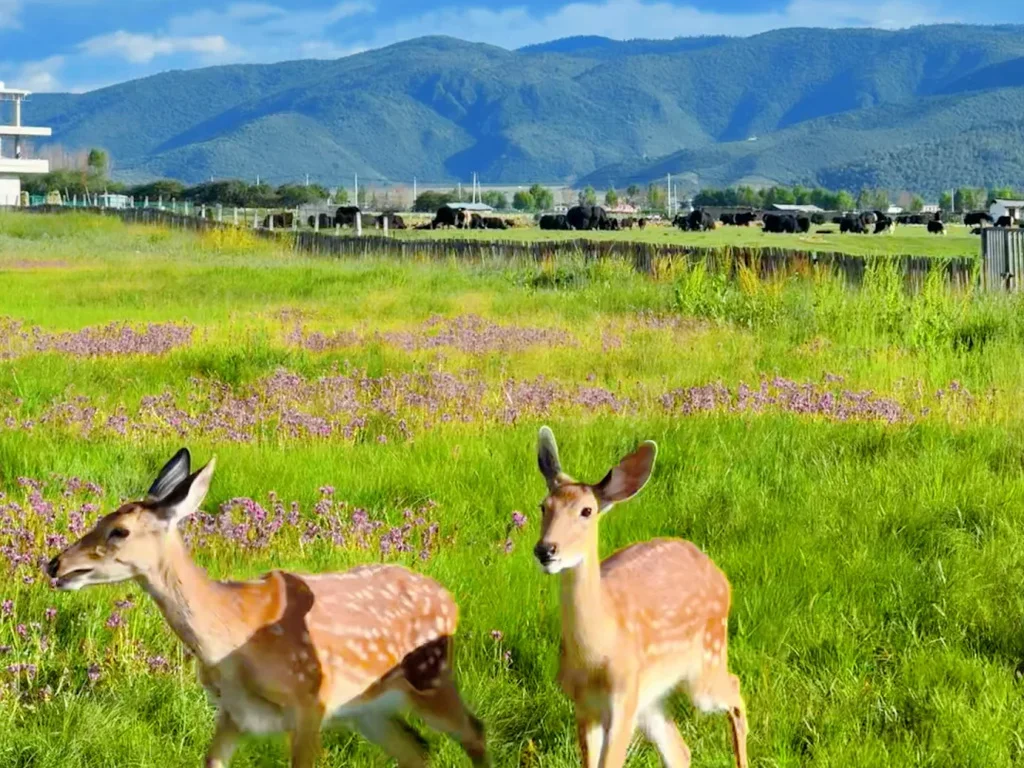
At sunset, the Napa Haiyila Grasslands are bathed in golden light, creating a gentle, soothing atmosphere where every ray of the setting sun holds the beauty of an unexpected encounter. As the sun sets, golden afterglow spreads across the entire Napa Haiyila Grassland, dyeing the meadows a warm golden hue. It resembles a golden carpet gilded by the sun, stretching to the horizon and interplaying with the snow-capped mountains and the lake’s surface in the distance, a sight so beautiful it leaves one speechless. The lake’s surface, bathed in the afterglow, shimmers with a faint golden glow, as if sprinkled with碎金; a gentle breeze blows, causing the ripples to shimmer and dance, mirroring the distant snow-capped peaks. The silver glow of the mountains intertwines with the golden radiance of the setting sun—one cold, one warm—blending into the most captivating play of light and shadow in the world. Bathed in the setting sun, the prayer flags are cloaked in a warm halo; their fluttering silhouettes appear all the more gentle, as if bidding farewell to the sunset, embracing the passage of time, and recounting the millennia-old history of this land. Cattle and sheep tread through the fading light, slowly making their way back to the pastures. The soft, gentle clatter of their hooves intertwines with the evening breeze and the chirping of birds, composing a melodious highland pastoral song—gentle and lingering, echoing between heaven and earth. In the distance, warm yellow lights glow from Tibetan-style log cabins, interplaying with the golden radiance of the setting sun and the shimmering ripples on the lake’s surface. The atmosphere is filled with warmth, fully revealing the vibrant, everyday life of the people, adding a touch of tenderness and warmth to this sacred plateau. At this hour, the Napa Lake Yila Grasslands have shed the intensity of midday, taking on a gentler and more serene atmosphere. The afterglow of the setting sun bathes us in its warmth and healing light, All fatigue and restlessness slowly dissipate in this golden glow and gentle breeze, leaving only a heart full of peace and joy. One cannot help but marvel that the most moving scenery in the world is nothing more than a heart filled with peace and joy—a heart that rejoices in the sunshine.
→ Click here to explore more ways to experience Shangri-La
Every Season Is a Poem: A Timeless Journey to the Grasslands
There is too much turmoil and too much hustle and bustle in this world. We’re always chasing after distant horizons, yet we forget to pause and appreciate the gentleness of life. The Yila Grasslands by Lake Napahai are just such a place—a place that allows you to slow down. There’s none of the city’s heavy traffic or the world’s worldly distractions; only vast grasslands, crystal-clear lake waters, fluttering prayer flags, leisurely grazing cattle and sheep, and time that moves at a slower pace.
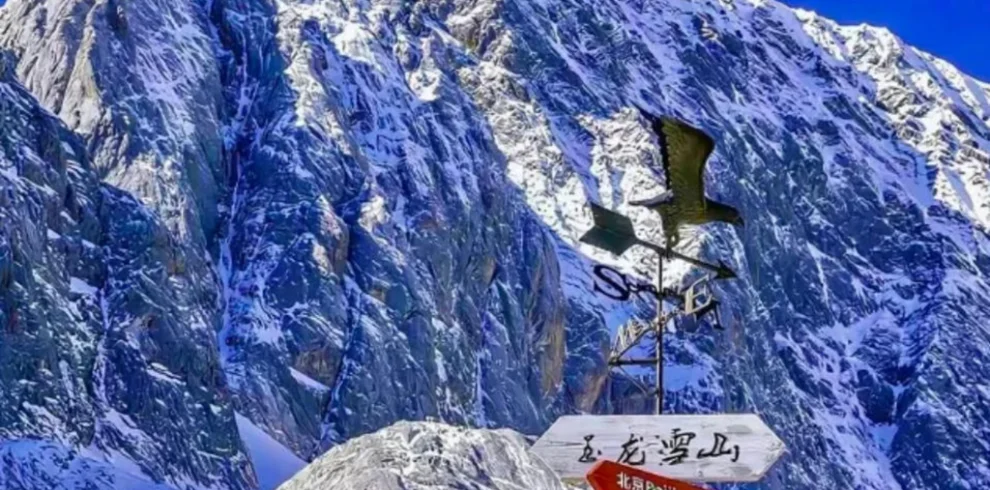
Premium Accommodations, Attractions, Lijiang Attractions—the photos showcase…
→ Contact Us and Join Us on a Journey of Discovery
"Customized for Tourists | Your Shuhe, Your Way! Adjust the pace of your itinerary, choose your accommodations, and select nearby attractions."
"We specialize in travel services for visitors to mainland China. With years of experience, we focus on group tours and customized trips to attractions in Yunnan, particularly Lijiang. There are no hidden fees, so visitors can enjoy their trip to mainland China with greater peace of mind."
Food Recommendations
- Must-Try: Yak Yogurt Hot Pot (exclusively served at Mu Yun·Wild Luxury Camp; its sweet-and-sour flavor cuts through the richness, served with barley dumplings and wild blueberries), Tibetan-Style Yak Meat Hot Pot (with a rich, flavorful broth that warms the stomach—perfect for high-altitude dining);
- Tibetan Specialties: Butter tea (available in both savory and sweet varieties; the sweet version is recommended as it’s more suitable for tourists—it wards off the cold, warms the body, and alleviates altitude sickness), barley cakes (served with honey—sweet, fluffy, and not greasy), Yak yogurt (rich and tangy, served with dried fruit), Grassland BBQ (offered at the Yila Village Horse Ranch; freshly slaughtered grassland sheep served with Tibetan-style spicy sauce—grill while watching the sunset), and Tibetan-style cold jelly (recommended in summer—refreshing and appetizing);
- Food Hotspots: Around Lake Napahai, Yila Village, Shangri-La City Center/Dukezong Ancient Town. We recommend long-standing local eateries frequented by locals and suggest avoiding overpriced “Instagram-famous” spots. Our guide can help you select authentic local cuisine, and for customized tours, the menu can be adjusted to suit your tastes;
- Friendly Reminder: In high-altitude regions, meals tend to be light, and the cost of transporting ingredients is high. We recommend that travelers eat in moderation, avoid going on an empty stomach or eating greasy foods, and refrain from drinking alcohol to prevent gastrointestinal discomfort or worsening altitude sickness. Do not blindly trust restaurant recommendations from private car drivers, as most receive kickbacks; Our tour guides will provide advance reminders regarding relevant precautions to help alleviate altitude sickness. Recommended souvenirs include yak jerky (choose bulk options for free samples), Tibetan-style hand-knitted scarves, and barley cookies. Avoid purchasing counterfeit silver jewelry or fake herbal medicines from roadside vendors.
Recommended Accommodations
- Luxury Experience: Tianjie·Napa Lake Campground (starlit bubble tents, 360° stargazing glass cabins with underfloor heating, offering panoramic views of the grasslands; includes a Tibetan-style breakfast; requires booking one month in advance; ideal for travelers seeking a high-quality experience);
- Best Value Options: Shili Snow Mountain “Mirror of the Sky” Tent Estate (detached wooden cabins with private bathrooms, including a complimentary Tibetan costume experience and views of the grasslands), Yila Village Nomadic Tent Guesthouse (mobile tents set up by Tibetan families, offering a taste of nomadic life, including Tibetan-style breakfast and dinner; available only in summer), which boasts a prime location, making it convenient for lake-circling tours and horseback riding, and is suitable for most travelers;
- For those on a budget: Affordable guesthouses in downtown Shangri-La and the Dukezong Old Town, just a 15- to 30-minute drive from Lake Napahai, with convenient transportation; some feature basic heating facilities.
- Key Tips for Winter Accommodations: Prioritize room types labeled "Oxygen Supply + Floor Heating" to avoid issues such as some guesthouses being closed or lacking heating. Since November and December are the peak bird-watching season, book accommodations 1–2 months in advance to ensure availability;
- Exclusive to Travel Agencies: Group tours include accommodations; you can choose a package that fits your budget. During winter, we prioritize accommodations with oxygen supply and underfloor heating, and during peak season, we prioritize reservations for rooms with scenic views; For customized tours, we can book starlight bubble houses, nomadic yurts, or distinctive Tibetan-style guesthouses based on your needs. We provide transportation services, and some guesthouses offer value-added services such as Tibetan-style afternoon tea and traditional Tibetan clothing experiences.
Important Notes
- Documentation: Please remind visitors to bring their entry documents. Note that identification will be verified for park admission, transportation, and accommodations, and that relevant documents are required to purchase discounted tickets (a Taiwan Compatriot Permit may be used in lieu of an ID card). We can help confirm the document requirements and provide assistance throughout the process;
- Climate and What to Wear: UV levels are high on the Yila Grasslands of Lake Napa (three times higher than on the plains), so be sure to bring sun protection (SPF 50+ sunscreen, sunglasses, a sun hat, a face mask, and sun-protective clothing); There is a significant temperature difference between day and night; even in summer, you should bring a light down jacket, and in winter, you’ll need a thick down jacket, thick gloves, a woolen hat, a fleece-lined scarf, and non-slip snow boots; wear comfortable, non-slip shoes for horseback riding and hiking;
- Tibetan Customs and Ecological Conservation (Key Points; Combines Information 1, 4, 5, and 8): Respect Tibetan Buddhist beliefs and local Tibetan customs; obtain permission before photographing Tibetans, life in Tibetan villages, or religious scenes; when spinning prayer wheels, circumambulating white stupas, or walking around mani piles, move clockwise—never counterclockwise; Do not casually touch religious objects such as prayer flags, white stupas, Buddha statues, or ritual implements, and do not step over ritual implements or fire pits; do not point at sacred mountains or white stupas with your fingers, and do not photograph monks without permission; do not touch the tops of Tibetan children’s heads (as the top of the head is considered sacred in Tibetan culture); When interacting with local Tibetans, you may use simple Tibetan phrases such as “Tashi Delek” (good luck and happiness) to express friendliness; Napa Lake is a wetland ecological reserve. Driving vehicles across the grasslands, littering, picking wild plants, or disturbing migratory birds such as black-necked cranes is strictly prohibited; violators will face fines;
Is there a big difference in the scenery at Napa Lake and the Yila Grasslands between the rainy season and the dry season?
During the rainy season, standing water forms a lake, its vast surface resembling a mirror reflecting the sky; during the dry season, the lake recedes, revealing a boundless grassland dotted with herds of cattle and sheep—each scene possesses its own unique beauty.
How much time should I set aside for a visit to the Yila Grasslands at Napahai?
We recommend spending 2 to 3 hours here, taking a leisurely drive along the lakeside road to enjoy the scenery, take photos, and go horseback riding—a relaxed and comfortable experience without feeling rushed.
Can I go horseback riding on the Napahai Grasslands?
The grasslands feature designated horseback riding trails where you can ride deep into the meadows to take in the scenery and experience the charm of the highland pastures—it’s both safe and perfect for taking photos.
What is the best time of year to visit Lake Napa for the most beautiful scenery?
Summer and fall are the most beautiful seasons—summer offers lush greenery, blooming flowers, and a cool escape from the heat, while fall brings clear skies and crisp air, creating perfect lighting conditions. It’s a great place to visit year-round.