











The charm of Songzanlin Monastery lies not only in its own sacredness and solemnity, but also in its wonderful harmony with the ancient town of Dukezong. It’s about a 20-minute drive from the ancient town of Dukezong.Shangri-La Songzanlin Monastery Attraction...experience the majestic power of Tibetan faith; and when you return from the awe-inspiring experience at Songzanlin Monastery, the tranquility and gentleness of the ancient town of Dukezong will serve as a haven to soothe the turmoil of your soul.
Table of Contents
Ticket and Opening Hours Information
- Ticket Information: The standard package for Songzanlin Monastery is 90 yuan per person (including 55 yuan for admission, 20 yuan for round-trip shuttle service, and 15 yuan for guided tour services); Individual admission tickets can be purchased on-site for 55 yuan (please consult the ticket agent; purchasing the shuttle bus ticket and guided tour is not mandatory); student tickets are 62 yuan per person (including a half-price admission fee of 27 yuan, a round-trip shuttle bus fare of 20 yuan, and a guided tour fee of 15 yuan);
- Discount Policy: Seniors aged 70 and older, people with disabilities, active-duty and veteran military personnel, and children under 1.2 meters tall are admitted free of charge (subject to payment of sightseeing bus and guided tour fees, if applicable); Seniors aged 60–69, minors aged 6–18, and full-time students under 24 are eligible for half-price admission (27 yuan). Valid identification must be presented (ID card, student ID, senior citizen card, etc.; a Taiwan Compatriot Permit may be used in lieu of an ID card);
- Hours: 7:40 a.m.–6:30 p.m. year-round (We recommend arriving early to avoid peak crowds; the light is best and there are fewer people in the early morning, making it easier to capture photos of the morning mist and lake reflections) ; The main hall inside the temple is open from 9:00 a.m. to 5:00 p.m. Best times to visit: (9:00–11:00 a.m., when it’s quiet and less crowded, ideal for sightseeing and praying; between 5:00 and 6:00 p.m., when you can admire the sunset casting its glow on the golden roof, creating a truly magical atmosphere). Recommended visit duration: 2–4 hours (including sightseeing, photography, and breaks);
- How to Purchase Tickets: You can book package deals online (through platforms such as Ctrip and Qunar); advance reservations are required, and please read the rules carefully regarding refunds and changes. Purchasing tickets on-site offers more flexibility—you can choose whether to buy the ticket and guided tour separately—making it even more convenient;
- Parking Information: The scenic area offers free parking. If you’re driving, simply set your GPS to “Gadan Songtsenling Monastery Ticket Office.” During peak season, we recommend taking a taxi to avoid parking congestion;
- Exclusive Benefits for Travel Agencies: “Group tours offer a one-stop service covering admission tickets, sightseeing buses, and guided tours—no need to purchase tickets separately, saving you time and hassle; Customized tours allow you to plan off-peak itineraries, book exclusive guides, adjust the pace of the trip to your needs, and provide professional altitude sickness prevention measures along with insights into Tibetan Buddhist culture,” emphasizing that there are no hidden fees.
Why is Songzanlin Monastery a must-see for tourists?
- Highlight 1: A World-Class Tibetan Buddhist Landmark—Known as the “Little Potala Palace,” this is one of the largest Tibetan Buddhist monasteries in Yunnan and the most famous in the Kham region. Built against the mountainside, its Tibetan-style watchtower architecture is majestic and spectacular. with gilded roofs glistening in the sunlight. Standing by Lake Lhamo Yangco, you can admire the temple’s panoramic view and its reflection in the water—a must-visit spot for tourists. Our guide will lead you to the best photo spots and explain the temple’s history and architectural artistry;
- Highlight 2: A Millennia-Old Treasury of Tibetan Art—The temple’s murals and thangka paintings are truly unparalleled. featuring vibrant colors and meticulous brushwork. The exhibits include Buddhist stories, historical anecdotes, as well as precious artifacts such as palm-leaf manuscripts and gilded Buddha statues—it feels as though you’ve stepped into a museum of Tibetan art. Our guide will provide detailed explanations of the stories behind these artifacts and the essence of Tibetan art, giving visitors a deep understanding of Tibetan Buddhist culture;
- Highlight 3: An Immersive Spiritual Experience—Visitors can participate in rituals such as spinning prayer wheels and lighting butter lamps to pray for blessings, in the early morning, you can observe monks performing their morning prayers and listen to the sound of sutra chanting; occasionally, you may witness scenes of monks engaging in debate or meditation. The Masked Dance Festival (Kham Dance) held annually on the 29th day of the 11th lunar month, the Butter Lamp Festival in the first month of the Tibetan calendar are particularly grand and solemn events. This immersive experience of the spiritual power of Tibetan Buddhism aligns with visitors’ desire for inner peace;
- Highlight 4: Flexible and Easy-to-Plan Itinerary—Can be combined with core Shangri-La attractions such as the Old Town of Dukezong, Lake Napahai, and Pudacuo National Park for a connected tour. Whether you choose a group tour or a customized tour, the pace of the itinerary can be flexibly adjusted. We provide door-to-door transportation, altitude sickness prevention measures, ticket booking services, and expert commentary on Tibetan Buddhist culture, saving travelers the hassle of arranging transportation, managing altitude sickness, and navigating religious etiquette. There are no hidden fees throughout the trip, and each season offers its own unique charm (May–October features comfortable weather, while winter’s snowy landscapes contrast beautifully with the Golden Summit, creating an even more solemn atmosphere).
The Echoes of Buddhist Chants: Faith and the Passage of Time at Songzanlin Monastery
Amid golden roofs and white walls, step into the hidden realm of the Tibetan Buddhist kingdom

Standing at the foot of Songzanlin Monastery and looking up, the cluster of temples built along the mountainside resembles a miniature Potala Palace, radiating a sacred glow beneath the blue sky of the plateau. This isShangri-La Songzanlin Monastery Attraction...Yunnan’s largest complex of Tibetan Buddhist monasteries, and a sacred site of faith in the hearts of the Tibetan people. The golden roofs, white walls, and red windows intertwine in the sunlight to form a solemn yet magnificent panorama; every tier of the overhanging eaves and every stroke of colorful paint embodies the architectural art and spiritual power of Tibet spanning a thousand years.
The early morning mist had not yet fully dissipated; the morning light filtered through the mountain ridges and shone upon the temple’s golden roof, making the entire complex seem bathed in a gentle, Buddha-like radiance. At this moment, the sound of the temple’s ritual bells drifted on the breeze, intertwining with the distant wisps of cooking smoke and the crisp mountain air, instantly making one forget the turmoil of the mundane world, leaving only a heart filled with peace and reverence. As you ascend the stone-paved path, Tibetan-style buildings stand in a harmonious, staggered arrangement on either side, their walls adorned with murals depicting ancient Buddhist tales. With every step, it feels as though you are embarking on a journey of faith that transcends time.
Prayer Wheels and Faith: Every Rotation Is a Devout Prayer

In the alleys of Songzanlin Monastery, prayer wheels are everywhere to be seen. Their golden bodies glisten in the sunlight, engraved with Tibetan scriptures. As the wind blows, the wheels turn slowly, as if reciting the scriptures ten thousand times. Countless devotees and travelers come here to gently touch the prayer wheels and turn them clockwise once, entrusting their heartfelt wishes to each rotation.
Strolling along the corridor lined with prayer wheels, listening to the humming sound of the wheels turning, and feeling the gentle power of Tibetan faith. Inside the temple, monks are chanting sutras; their deep, resonant voices echo through the halls, intertwining with the sound of the wind outside and the hum of the prayer wheels to form a symphony of Tibetan faith. Standing before the halls and watching the devout figures of the worshippers, you’ll come to understand that this is not merely a temple—it is a spiritual haven for the Tibetan people and a place where their faith finds its anchor.
A Temple at Sunset: The Golden Roof, the Radiance of the Buddha, and the Busyness of Everyday Life
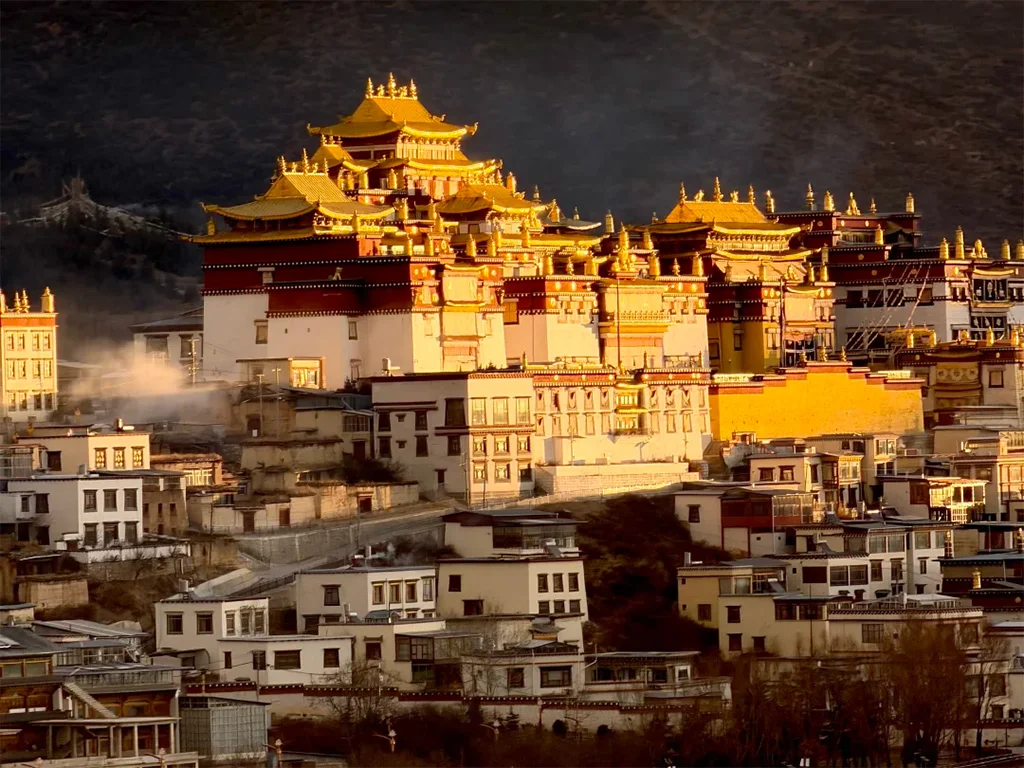
The evening sunset is Songzanlin Monastery’s most beautiful adornment. As the sun sets, its afterglow bathes the temple’s golden roofs in a soft orange-red hue. The white walls and red windows seem to come to life in the play of light and shadow, and the entire temple complex is enveloped in a sacred and gentle halo of light. At this moment, wisps of cooking smoke rise from the temple as the monks conclude their day of spiritual practice and return to their quarters. Warm yellow light spills from the Tibetan-style wooden houses, intertwining with the golden glow of the sunset to create a scene where faith and the everyday life of the people blend seamlessly.
Standing at the highest point of the temple and looking down over the entire Songzanlin Monastery, the golden roofs stretch out in layer upon layer, resembling a surging golden ocean; below, the Tibetan-style villages are scattered in a harmonious arrangement, with wisps of smoke rising from their kitchens, creating a picturesque contrast against the distant mountains and the blue sky. As the sunset gradually sank behind the mountains, the temple’s lights came on, and the golden roofs continued to shimmer in the night, resembling a gemstone guarded by Tibetan faith—gentle yet solemn.
→ Click here to explore more ways to experience Shangri-La
The Poetry of Tibetan Faith: Where Songzanlin Monastery Meets Dukezong
At Songzanlin Monastery, you can stroll along the prayer wheel corridor and experience the devotion of the Tibetan faith; you can climb to the highest point of the monastery to overlook the scenery of the entire monastery complex; as the sun sets, you can admire the picturesque scene where the golden Buddha’s halo blends with the hustle and bustle of everyday life; or you can step inside the temple halls to experience the sanctity and solemnity of Tibetan Buddhism. Every inch of land here holds the poetry of Tibetan faith; with every breath, you can feel the crisp freshness and tranquility of the plateau.

This is a classic Yunnan travel route connecting Dali, Lijiang, and Shangri-La. Starting from Erhai Lake and the Ancient City of Dali, the journey continues to Lijiang to admire the scenery of the Jade Dragon Snow Mountain and the ancient city, before heading deeper into Shangri-La to explore Tiger Leaping Gorge, Pudacuo National Park, and the ancient town of Dukezong. The itinerary combines high-altitude natural landscapes, ancient town culture, and ethnic minority traditions, making it ideal for travelers experiencing Yunnan in depth for the first time.
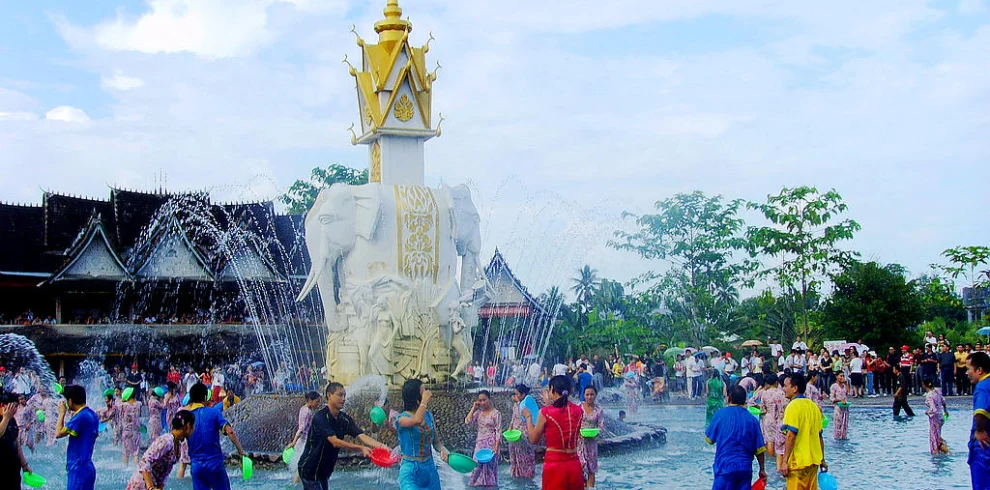
Luxury Accommodations, Unique Attractions, Kunming: Immerse Yourself in the “Number One Under Heaven…”
Luxury Accommodations, Unique Attractions, Kunming Attractions—Immerse Yourself in "The World’s…
→ Contact Us and Join Us on a Journey of Discovery
"Customized for Tourists | Your Shuhe, Your Way! Adjust the pace of your itinerary, choose your accommodations, and select nearby attractions."
"We specialize in travel services for visitors to mainland China. With years of experience, we focus on group tours and customized trips to attractions in Yunnan, particularly Lijiang. There are no hidden fees, so visitors can enjoy their trip to mainland China with greater peace of mind."
Food Recommendations
- Must-Try: Yak Hot Pot (Min Zhu Lam and Bodh Gaya Palace Tibetan Cuisine Bar have excellent reputations; featuring cordyceps flowers and matsutake mushroom broth; the yak beef is tender and juicy; 80–90 yuan per person), Tibetan-style clay-pot chicken (Lulang Stone Pot Chicken, with palm ginseng; the broth is fresh and flavorful, served with barley cakes; 80 yuan per person)—these dishes are warm and soothing to the stomach, making them ideal for high-altitude dining;
- Tibetan Specialties: Butter Tea (available in both savory and sweet varieties; the sweet version is recommended as it’s better suited for tourists—it wards off the cold, warms the body, and alleviates altitude sickness; 15 yuan per pot), Barley Cookies (served with honey; sweet, fluffy, and not greasy; 8 yuan per serving), Hand-pulled lamb ribs (at the Bodh Gaya Imperial Tibetan Cuisine Bar—the meat is firm with no gamey taste; served with chili powder; approximately 60 yuan per person), yak yogurt (rich and tangy, served with dried fruit; approximately 20 yuan per serving);
- Foodie Hotspots: The alleys and lanes of Dukezong Ancient Town and downtown Shangri-La. We recommend long-standing local eateries frequented by locals and suggest avoiding overpriced “Instagram-famous” spots. Our tour guide can help you select authentic local cuisine, and the menu can be customized to suit your tastes on a private tour;
- Friendly Reminder: Diets in high-altitude areas tend to be light; we recommend that visitors eat in moderation, avoid eating on an empty stomach or consuming greasy foods, and refrain from drinking alcohol to prevent gastrointestinal discomfort or worsening altitude sickness. Our tour guides will remind you of these precautions in advance to help alleviate altitude sickness. For souvenirs, you can choose yak jerky (sample available when purchasing loose; 50–80 yuan per jin), Tibetan-style hand-knitted scarves, and barley cakes. Avoid purchasing counterfeit silver jewelry or fake herbal medicines from roadside vendors, and do not buy handmade Tibetan knives (they are prohibited on airplanes and high-speed trains, and mailing them is troublesome).
Recommended Accommodations
- Luxury Experience: Songzan Linka Hotel (located next to Songzan Lin Monastery, a Tibetan-style estate directly facing the stupa; includes a Tibetan-style afternoon tea and complimentary admission tickets). With its stunning views and an unforgettable experience, it’s perfect for travelers seeking high-quality experiences;
- Best Value Options: Qingke Bieyuan (located in the ancient town of Dukezong, featuring Tibetan-style log cabins, Tibetan-style breakfast included, and oxygen supply); Fenrenboqi Guesthouse (located within the ancient town, with underfloor heating and a humidifier, free butter tea, and a warm and welcoming owner). Great location, within walking distance of the bus stop, convenient for visiting Songzanlin Monastery, suitable for most travelers;
- On a budget: Guesthouses located a 5-minute walk outside the old city are half the price of those inside the city, per person, and are just as convenient for visiting Songzanlin Monastery; some come with basic heating facilities;
- Key Tips for Winter Accommodations: Prioritize room types labeled “Oxygen Supply + Floor Heating” to avoid issues such as some guesthouses being closed or lacking heating. It is recommended to book 1–2 weeks in advance;
- Exclusive to Travel Agencies: Group tours include accommodations, with options available at various price points to suit your budget. During the winter, we prioritize accommodations equipped with oxygen supply and underfloor heating. For customized tours, we can book unique Tibetan-style guesthouses based on your preferences and provide transportation services. Some guesthouses offer value-added services such as Tibetan-style afternoon tea and Tibetan traditional clothing experiences.
Important Notes
- Documentation: We remind visitors to bring their Taiwan Compatriot Permit. Please note that documentation will be verified for park entry, transportation, and accommodations, and relevant documents are required to purchase discounted tickets (the Taiwan Compatriot Permit may be used in lieu of an ID card). We can assist in confirming document requirements and provide assistance throughout your visit;
- Climate and What to Wear: UV levels at Songzanlin Monastery are high (three times higher than on the plains), so be sure to bring sun protection (SPF 50+ sunscreen, sunglasses, a sun hat, and a face mask); There is a significant temperature difference between day and night; even in summer, bring a light jacket, and in winter, bring a thick down jacket, thick gloves, a woolen hat, a fleece-lined scarf, and non-slip snow boots; The steps inside the temple are steep; wear comfortable, non-slip flat shoes and avoid white shoes (as they get dirty easily);
- Tibetan Buddhist Etiquette (Key Points, Compiled from Sources 1, 3, 8, and 9): Respect local Tibetan Buddhist customs; when entering the main hall of a temple, remove your hat and sunglasses, dress appropriately, and avoid revealing clothing such as shorts, short skirts, and spaghetti-strap tops; Do not touch religious objects such as Buddha statues, ritual implements, prayer flags, prayer wheels, or sutras without permission, and do not step over ritual implements or fire pits; When turning prayer wheels, circumambulating the main hall, or walking around a stupa, always proceed clockwise. It is recommended to turn the prayer wheel three times to pray for blessings; do not turn it counterclockwise; Maintain silence inside the halls; loud talking, photography, and smoking are prohibited; Do not point at Buddhist statues with your fingers, and do not take photos of monks or sacred texts without permission; do not touch the tops of Tibetan children’s heads (as the top of the head is considered sacred in Tibetan culture); when interacting with local Tibetans, you may use simple Tibetan phrases such as “Tashi Delek” (good luck and happiness) to express friendliness; If you encounter pilgrims performing prostrations, please do not crowd around them or take photos without permission; maintain an appropriate distance to show respect; do not step on prayer flags or mani stones, and under no circumstances take religious artifacts such as mani stones without permission;
- Avoid Common Pitfalls: Say no to “low-cost tours” and unlicensed taxis soliciting customers on the street; do not buy counterfeit local specialties or fake silver jewelry from street vendors; and do not blindly trust “miracle cures” for altitude sickness. Clarify prices in advance at restaurants and for travel photography sessions, and refuse hidden charges; prices at some small shops inside and around temples tend to be high—ask your tour guide for advice before shopping; lighting butter lamps is a voluntary act of merit—the amount is up to you and is not mandatory;
- Safety Reminder: Most of the buildings in the temple complex are made of wood. Smoking and bringing flammable or explosive items are strictly prohibited. Do not eat self-heating hot pot meals in your room, as the poor ventilation in Tibetan-style log cabins can easily trigger smoke alarms. Do not walk alone on secluded paths at night, as some areas lack streetlights; if you want to enjoy the night scenery, stay close to your accommodation. Keep your personal belongings secure to prevent loss; the steps inside the monastery are steep—do not walk and take photos at the same time to avoid slipping and injuring yourself;
- Other Reminders: Some areas of the temple may be icy in winter, so please walk carefully; cell service is weak inside the temple, so download offline maps in advance and bring some small change for donations and bus fare; follow your guide’s instructions during the tour and do not enter the monks’ living quarters without permission.
- Safety and Emergencies: We provide 24-hour emergency contact information for the travel agency and first-aid hotlines for scenic areas. Our tour guides will accompany you throughout the trip and can provide immediate assistance in case of illness, getting lost, or other emergencies. Be sure to fasten your seatbelt while riding in the vehicle, and refrain from talking to the driver or urging them to drive faster.
Frequently Asked Questions
How long does it take to visit Songzanlin Monastery?
Generally, if you take your time exploring and taking photos, about 1.5 to 2 hours should be enough; however, if you want to examine the architecture in detail and try spinning the prayer wheels, setting aside 2 hours will give you more time to relax.
When is the best time to visit Songzanlin Monastery to take photos?
Early morning mist and late afternoon sunset are the best times to visit, when the light is soft and the golden roof is bathed in warm hues, creating a serene and sacred atmosphere.
Are there any etiquette guidelines to follow when using a prayer wheel?
Prayer wheels should be turned clockwise; simply give them a gentle nudge—there’s no need to turn them forcefully. Please remain quiet while visiting and respect the temple’s atmosphere.
Can I plan a visit to Songzanlin Monastery and the ancient town of Dukezong together?
It’s perfect—the drive between the two places takes about 20 minutes. You can visit temples in the morning and explore the old town in the afternoon. The itinerary flows smoothly and lets you experience different atmospheres.
Are there any dress code requirements for visiting Songzanlin Monastery?
We recommend dressing appropriately and avoiding revealing clothing. You don’t need to wear traditional attire; just make sure your outfit is clean and neat and shows respect for the venue.
→ Click here for more information on traveling to Shangri-La