











The ancient town of Dukezong—known as the “City of Moonlight”—bears witness to the long history of the Ancient Tea-Horse Road and harbors the gentlest faith and poetic charm. The winding bluestone paths stretch out, Tibetan-style wooden houses are artfully arranged, and prayer flags flutter gently in the breeze—every corner is steeped in tranquility and serenity.
Climb Guishan Park, where the golden roof of the Great Buddha Temple glitters brilliantly; the panoramic view of the ancient city below is truly refreshing. Hand in hand, spin the giant prayer wheel, and as it turns slowly, make a wish—and let your worries drift away with the wind. As night falls, warm lights illuminate the streets and alleys, making the ancient city appear even more serene and gentle.
Table of Contents
Ticket and Opening Hours Information
- Admission Information: The Old Town of Dukezong is open to the public free of charge; there is no general admission fee, and no reservation is required. Admission to Guishan Park is free; at the Great Buddha Temple, visitors may make voluntary donations; and the world’s largest prayer wheel is available for free use. Admission to some Tibetan-style museums and experience centers (such as the Ancient Tea-Horse Road Museum) requires a separate fee (approximately 20–50 yuan), while the Ancient Tea-Horse Road Museum offers free admission (ID required);
- Hours: The Old Town is open all day (recommended visiting hours: 3:00 PM–9:00 PM—explore the alleys during the day, watch the sunset in the evening, and enjoy the lights at night); Temples/Exhibition Halls: 9:00 AM–5:00 PM; best times to visit (9:00–11:00 AM, when it’s quiet with fewer people and ideal for photos; evening from 6:00–8:00 PM, when you can watch the sunset and join in the Guozhuang dance). Recommended duration: half-day tour (2–3 hours) or full-day in-depth tour;
- Best Time to Visit: The weather is pleasant from May through October, and the autumn scenery is breathtaking from September through October. In winter, the snowy landscape is serene, and with fewer tourists, it offers a wonderful experience. We can recommend tailored itineraries based on your travel dates, such as winter snow viewing or autumn foliage tours;
- Parking Information: There are three public parking lots around the Old Town (North Gate Parking Lot, East Gate Parking Lot, and Riyue Xingcheng Parking Lot), at a rate of 5 yuan per hour. During peak season, we recommend taking a taxi (a taxi ride from downtown to the Old Town costs about 10 yuan);
- Exclusive Benefits for Travel Agencies: Mention “Group tour participants can enjoy ticket booking services for select paid attractions, priority admission, and coverage of transportation, cultural guided tours, and altitude sickness prevention fees.” "Customized tours allow you to plan off-peak itineraries, select unique intangible cultural heritage experiences, adjust the pace of the trip to suit your needs, and provide professional altitude sickness prevention measures and Tibetan cultural commentary," with an emphasis on no hidden fees.
Why the Old Town of Dukezong Is a Must-See for Tourists
- Highlight 1: World-Class Tibetan Landmark—Home to the world’s largest prayer wheel, standing 21 meters tall, which requires the combined effort of 8 to 10 people to turn. Turn it clockwise three times to pray for peace and safety. At dusk, when the blue-hued light sets the mood, the atmosphere is perfect for photos, making it a must-visit spot for tourists. Our guide will lead you to the best photo spots and explain the cultural significance of spinning the prayer wheel to pray for blessings;
- Highlight 2: The Culture of the Millennium-Old Tea-Horse Trail—Horse hoofprints on the stone-paved paths bear witness to a thousand years of history, while Tibetan-style wooden houses are nestled in a staggered arrangement. and ancient alleys like Pijiangpo and Cangfang Street—quiet yet picturesque—offer an immersive experience of the Tea-Horse Ancient Trail’s historical legacy. Our guide will provide detailed explanations of the trail’s history and the distinctive features of Tibetan architecture, leading you to explore sites where you can experience intangible cultural heritage;
- Highlight 3: An Authentic Tibetan Cultural Experience—Every evening at Moonlight Square, Tibetan locals perform the free “Guozhuang” dance, and visitors are welcome to join in this immersive, interactive experience at no cost; The Tibetan teahouses and handmade craft shops lining the alleys are brimming with a vibrant, everyday atmosphere. Visitors can experience intangible cultural heritage activities such as photo shoots in traditional Tibetan attire, thangka painting, and Tibetan incense making—all of which cater to travelers seeking a deeper cultural experience;
- Highlight 4: Flexible and Easy-to-Plan Itineraries—Can be combined with core Shangri-La attractions such as Songzanlin Monastery, Pudacuo National Park, and Napahai Lake. Whether you choose a group tour or a customized tour, you can flexibly adjust the pace of your itinerary. We provide door-to-door transportation, altitude sickness support, ticket booking services, and Tibetan cultural commentary, saving travelers the hassle of arranging transportation, dealing with altitude sickness, and learning about Tibetan culture. There are no hidden fees throughout the trip, and each season offers its own unique charm (comfortable weather from May to October; serene winter snowscapes).
Raging Gorges: Exploring the Natural Wonders of the Jinsha River
Starting at the city gate, step into the millennia-old poem that is Moonlight City
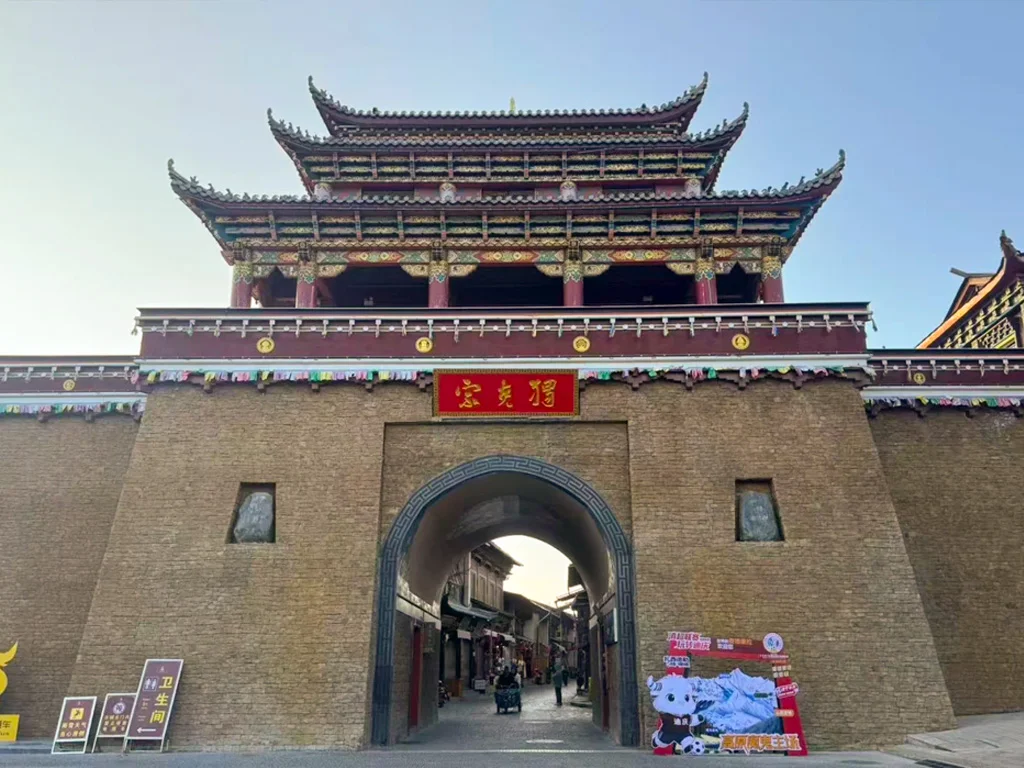
Passing through the city gate adorned with the three gilded characters “Dukezong,” the eaves—a blend of Tibetan and Han architectural styles—stretch out beneath the blue sky, while colorful prayer flags flutter in the wind, tinging the highland breeze with the hues of faith. This isAttractions in the Ancient Town of Dukezong, Shangri-LaThe entrance—and the starting point of the “City of Moonlight” story. Hidden within the earth-yellow bricks of the city walls are the sounds of camel bells from the ancient Tea-Horse Road; the painted bracket sets of the city gates embody the architectural wisdom of Tibet spanning a thousand years. Stepping through the city gate, a bluestone path stretches out before you. Warm yellow light filters through the wooden lattice windows of the Tibetan-style houses lining both sides of the street, as if gently beckoning every traveler to step into this ancient city bathed in moonlight.
As a transportation hub in northwestern Yunnan, Dukezong is not only the heart of Tibetan culture but also the gateway toShangri-La Tiger Leaping Gorge Attractionsan important stop along the way. From here, it’s about a 1.5-hour drive to the roaring gorges of the Jinsha River, where you can explore the magnificent and awe-inspiring scenery of “Tiger Leaping Gorge”; And when you return from the awe-inspiring Tiger Leaping Gorge, the tranquility and gentleness of Dukezong will serve as a haven to soothe your soul. The ancient town and the gorge—one gentle, one rugged; one tranquil, one dynamic—together compose the most captivating chapter of Shangri-La.
On Mount Guishan, the pinnacle of faith bathed in the golden glow of the Buddha's light
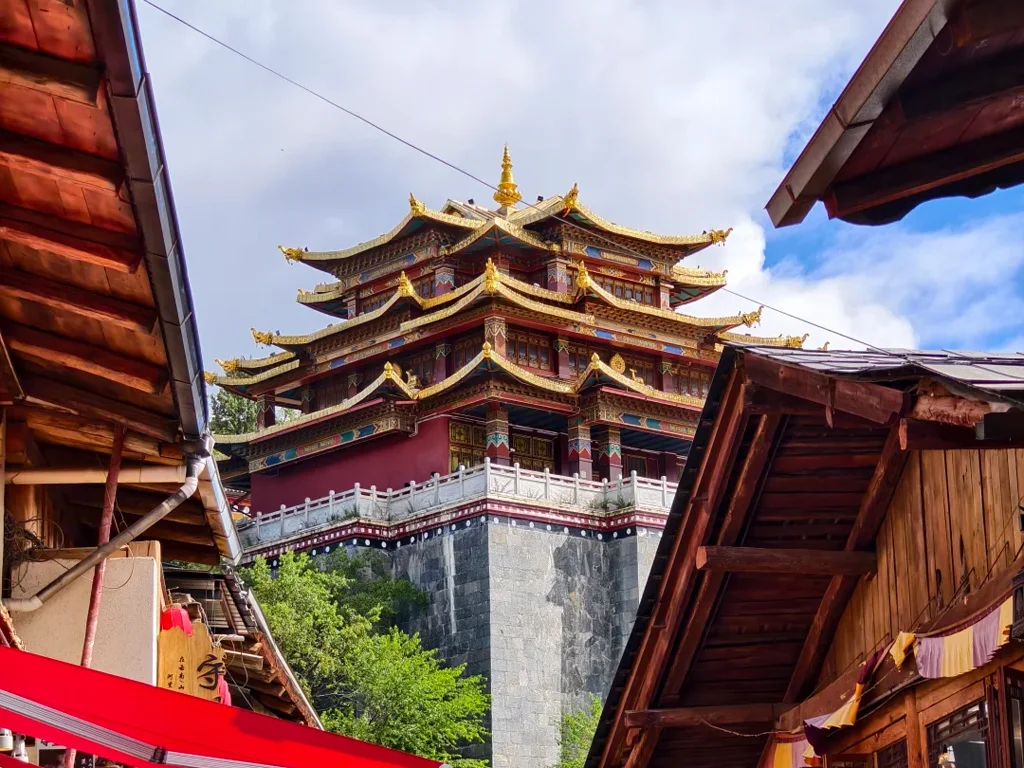
Climb the stone steps along the cobblestone path to reach the highest point in Dukezong—Guishan Park. The Great Buddha Temple at the summit is a poetic embodiment of Tibetan Buddhist charm. The multi-tiered, gilded-roofed structure with its overlapping eaves glows with a gentle radiance under the blue sky; every roof tile and every set of bracket sets embodies the sacredness and solemnity of Tibetan Buddhism. Standing on the temple’s terrace, the entire ancient city unfolds before your eyes: layers upon layers of bluish-gray roofs resemble a surging sea of stone; from the wooden chimneys of the Tibetan-style houses, wispy wisps of cooking smoke rise slowly, intertwining with the thin mist on the distant mountains.
Early morning at the Great Buddha Temple is the most poetic moment of the day. As the morning light filters through the mountains and cascades onto the golden roof, the entire temple seems bathed in a gentle, Buddha-like radiance. The wispy morning mist envelops Ancient Long in a dreamlike halo of light. At this hour, the sound of the temple’s Dharma bells drifts on the breeze, intertwining with the cooking smoke rising from the ancient town below and the crisp air of the distant snow-capped mountains. It instantly makes one forget the turmoil of the mundane world, leaving only a heart filled with peace and reverence.
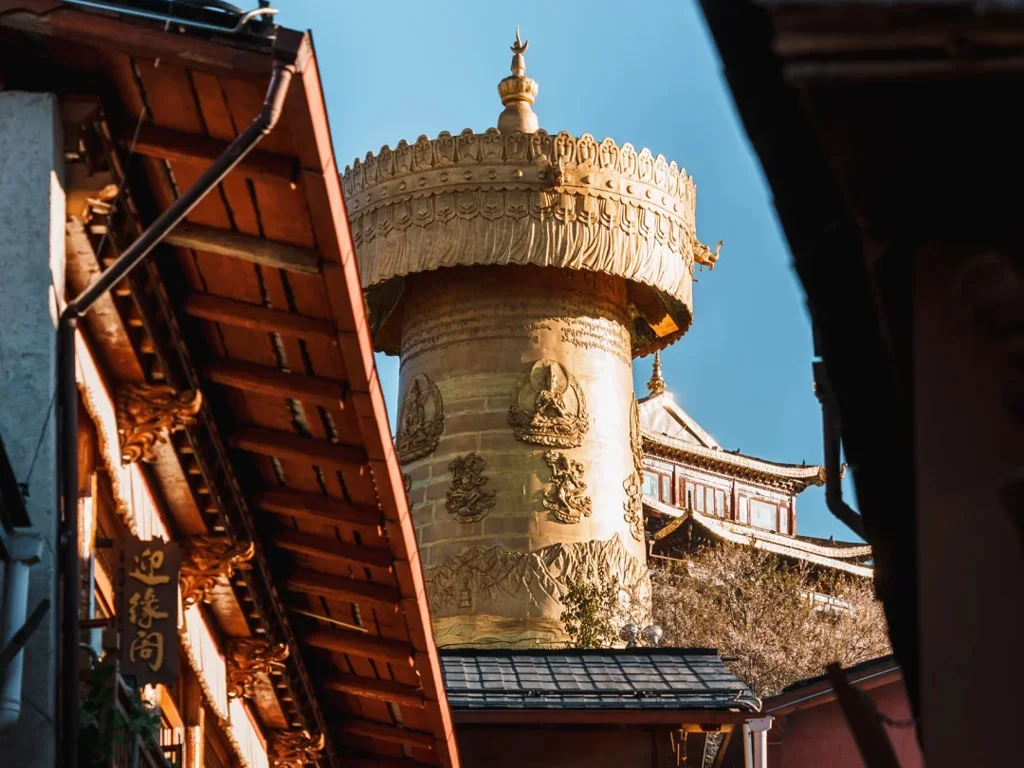
The world’s largest prayer wheel: one full rotation equals 10,000 wishes.
At the foot of Guishan Park stands the most moving symbol of Dukezong—the world’s largest gilded prayer wheel. The prayer wheel stands 21 meters tall and weighs 60 metric tons. Its surface is entirely engraved with Tibetan scriptures and Buddhist images, with every line embodying the devotion and prayers of the faithful. As you join fellow travelers and local Tibetans in working together to turn this prayer wheel, watching it rotate slowly while the scriptures on its surface glisten in the sunlight, and as the sound of the wind intertwines with the humming of the wheel, it feels as though the entire world has fallen silent.
One full rotation is equivalent to reciting the sutras ten thousand times—this is the gentlest form of prayer in Tibet. Countless travelers come here to turn the prayer wheels, offering prayers for themselves, their families, and strangers, weaving the tenderness and hopes from the depths of their hearts into each rotation. As the sun sets, the prayer wheels are bathed in a soft orange-red glow. The Buddha figures on their surfaces seem to come to life in the play of light and shadow, joining the surrounding Tibetan-style wooden houses and fluttering prayer flags to form a gentle tableau of Tibetan faith.
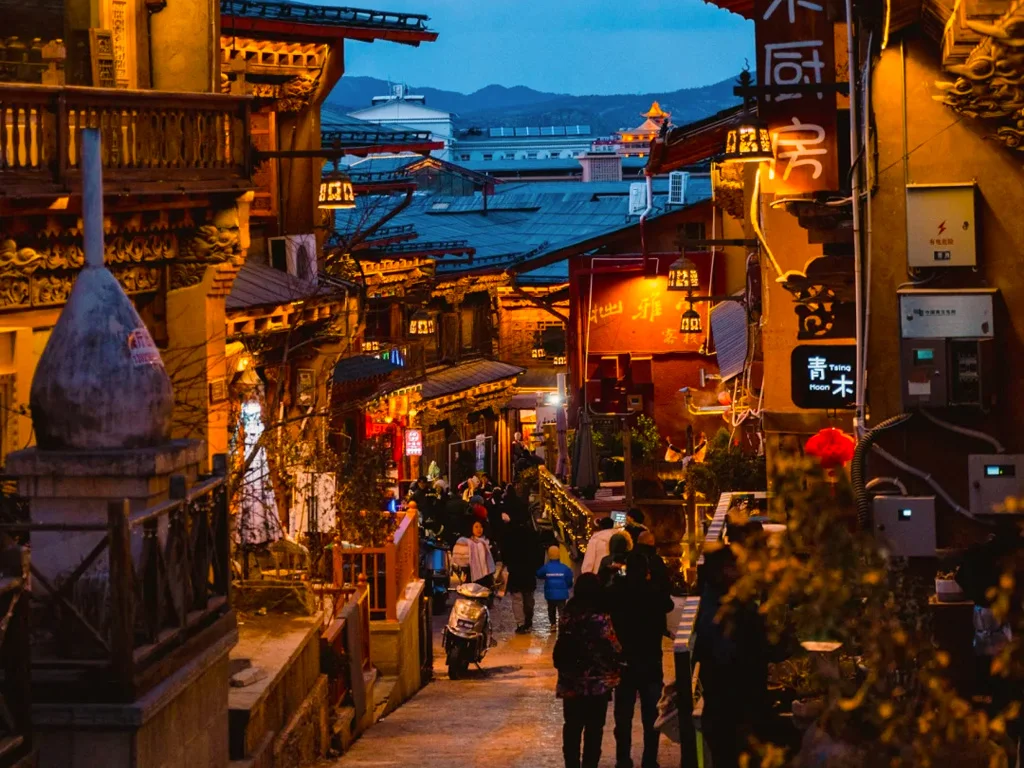
As Night Falls: Tibetan-Style Fireworks in the City of Moonlight
As dusk falls, the ancient town of Dukezong enters the most romantic hour of the day. The Tibetan-style wooden houses lining the streets and alleys glow with warm yellow light, and lanterns sway gently in the breeze, casting a soft golden glow over the bluestone pavement. At this hour, the ancient town is free from the hustle and bustle of the city. Only the aroma of butter tea wafting from Tibetan restaurants, the laughter echoing from dining halls, and the Tibetan songs drifting from roadside shops come together to compose a poem about the everyday life of Tibet.
Strolling through the streets and alleys of the ancient town, the bluestone pavement beneath my feet has been polished smooth and warm by the passage of time. Colorful prayer flags hang from the Tibetan-style wooden houses on either side, and the light filtering through the wooden lattice windows is like pairs of gentle eyes, gazing at every passing traveler. Occasionally, you’ll come across local Tibetan elders sitting in front of their doors, basking in the sun; the stories of Dukezong’s thousand-year history are hidden within the wrinkles on their faces; You’ll also meet travelers from all corners of the world, sitting in roadside bars, sipping a cup of butter tea, listening to the Tibetans recount the legends of the ancient city, and soaking in the gentleness and tranquility that belong to the City of Moonlight.
Standing at the summit of Guishan Park and gazing into the distance, the entire night view of the ancient city unfolds before your eyes: warm yellow lights dot the bluish-gray rooftops, like a scattering of starlight; in the distance, the golden roof of Songzanlin Monastery glitters in the night, echoing the lights of the ancient city; The contours of the mountains soften in the night, cradling the entire ancient town in their embrace. At this moment, Dukezong resembles a jewel guarded by moonlight—gentle and serene—inviting visitors to lose themselves in its beauty, reluctant to leave.
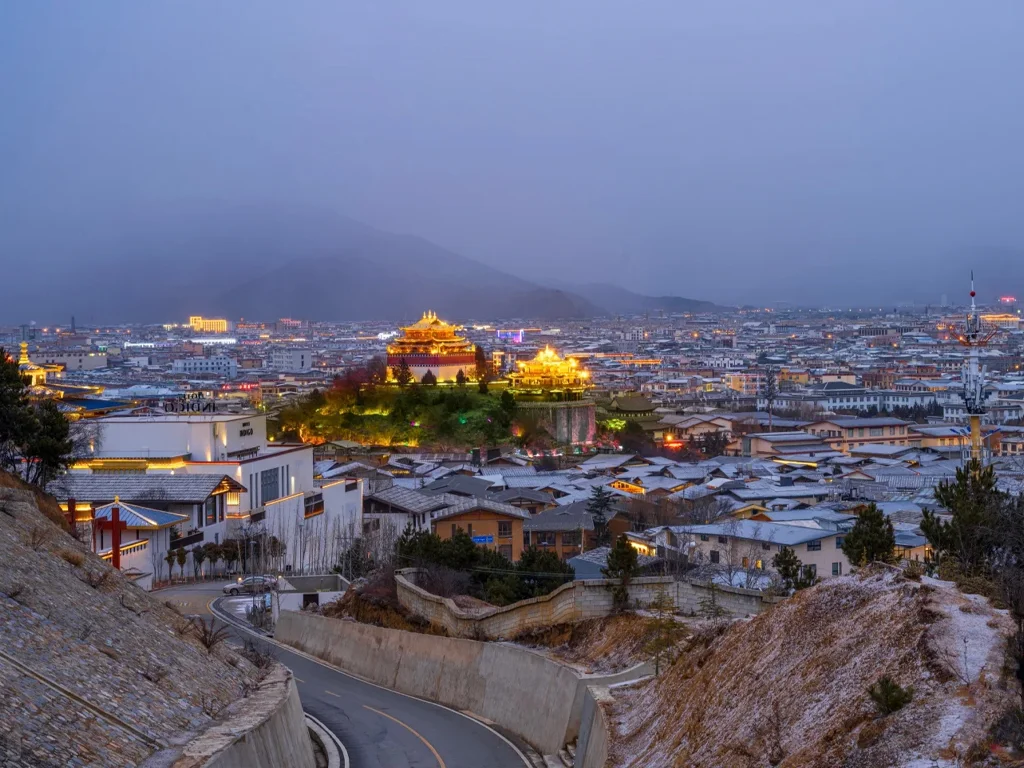
The Two Faces of Moonlight City: The Serenity of Faith and the Roaring Gorge
The charm of the ancient town of Dukezong lies not only in its tranquility and spiritual heritage, but also in the wonderful harmony it creates with the surrounding landscape. Starting from here, you can not only exploreShangri-La Tiger Leaping Gorge AttractionsMarvel at the magnificent scenery and feel the thunderous power of the Jinsha River; you can also visit Songzanlin Monastery to experience the sanctity and solemnity of Tibetan Buddhism; and you can delve into Tibetan villages to experience the daily lives of the local Tibetan people, sample butter tea and barley wine, and experience the warmth and hospitality of the Tibetan region.
In Dukezong, you can spin prayer wheels to pray for peace; stroll through the ancient city’s streets and alleys to experience the vibrant Tibetan way of life; climb Guishan Park to take in a panoramic view of the “City of Moonlight”; or head to Tiger Leaping Gorge to marvel at nature’s masterful craftsmanship. Time moves slowly here—so slowly that you can quiet your mind, let your thoughts wander for a while, and watch the clouds roll by. The scenery here is gentle—so gentle that you can let down your guard and feel the warmth and beauty of Tibetan lands.
→ Click here to explore more ways to experience Shangri-La
Keep a Moonlit Date: Step into the Serene Moments of Dukezong
Come to the ancient town of Dukezong in Shangri-La, where there is no hustle and bustle, only peaceful moments that flow gently by. Stroll through the quaint, ancient streets; climb Guishan Park to gaze upon the golden Buddha’s halo; and join others in turning the giant prayer wheels, gently entrusting your wishes to the wind. As night falls, warm lights illuminate the ancient town, prayer flags flutter gently, and even the breeze carries a sense of tranquility. You can immerse yourself in the interplay of faith and everyday life, or head nearby to Tiger Leaping Gorge to marvel at nature’s majestic wonders. This ancient city, favored by the moonlight, awaits you with open arms, promising a healing and unforgettable journey.

This is a classic Yunnan travel route connecting Dali, Lijiang, and Shangri-La. Starting from Erhai Lake and the Ancient City of Dali, the journey continues to Lijiang to admire the scenery of the Jade Dragon Snow Mountain and the ancient city, before heading deeper into Shangri-La to explore Tiger Leaping Gorge, Pudacuo National Park, and the ancient town of Dukezong. The itinerary combines high-altitude natural landscapes, ancient town culture, and ethnic minority traditions, making it ideal for travelers experiencing Yunnan in depth for the first time.
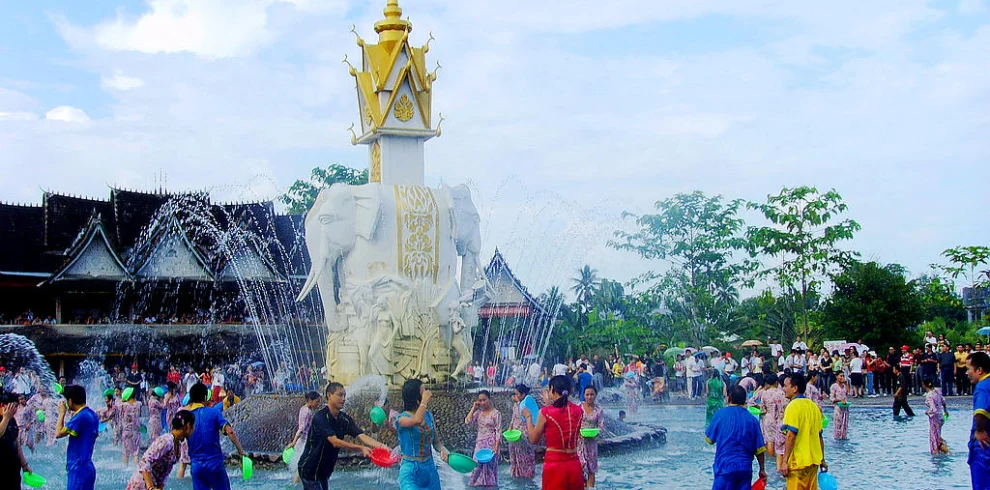
Luxury Accommodations, Unique Attractions, Kunming: Immerse Yourself in the “Number One Under Heaven…”
Luxury Accommodations, Unique Attractions, Kunming Attractions—Immerse Yourself in "The World’s…
→ Contact us and let’s explore together!
"Customized for Tourists | Your Shuhe, Your Way! Adjust the pace of your itinerary, choose your accommodations, and select nearby attractions."
"We specialize in travel services for visitors to mainland China. With years of experience, we focus on group tours and customized trips to attractions in Yunnan, particularly Lijiang. There are no hidden fees, so visitors can enjoy their trip to mainland China with greater peace of mind."
Food Recommendations
- Must-Try: Yak Hot Pot (Yintong Yak Hot Pot and Regong Yiren Ge have excellent reputations; the broth is simmered with beef bones and matsutake mushrooms, and the yak meat is tender and juicy—you can eat until you’re full for 80 yuan per person), Nixi Clay Pot Chicken (Wang Yongqing’s “Nixi Clay Pot No. 1” offers the most authentic flavor); warm and soothing for the stomach, perfect for high-altitude dining;
- Tibetan Specialties: Butter Tea (available in both savory and sweet varieties; the sweet version is recommended as it’s better suited for out-of-town visitors—it wards off the cold, warms the body, and alleviates altitude sickness), barley cakes (served with honey—sweet, fluffy, and not greasy), grilled Tibetan black pork (perfect for a group barbecue and a top choice for a late-night snack—crispy and flavorful without being greasy), Yak Yogurt (thick like cheese; delicious with dried fruit), Butter-Fried Matsutake Mushrooms (seasonal in August; crispy, fragrant, and tender);
- Foodie Hotspots: The alleys of the Old Town of Dukezong and the area around Moonlight Square. We recommend long-standing local eateries frequented by locals and suggest avoiding overpriced “Instagram-famous” spots. Our guide can help you select authentic local cuisine, and for customized tours, the menu can be adjusted to suit your tastes;
- Friendly Reminder: In high-altitude regions, meals tend to be light. We recommend that visitors eat in moderation, avoid going on an empty stomach or consuming greasy foods, refrain from drinking alcohol, and exercise caution when eating raw yak sashimi, as it can easily cause gastrointestinal discomfort. Our tour guides will provide advance reminders regarding these precautions to help alleviate altitude sickness. For souvenirs, you may choose dried yak meat (sample available with bulk purchases; 50–80 yuan per jin), Tibetan-style hand-knitted scarves, and barley cakes. Avoid purchasing counterfeit silver jewelry or fake herbal medicines from roadside vendors, and do not buy handmade Tibetan knives (they are prohibited on airplanes and high-speed trains, and mailing them is troublesome).
Recommended Accommodations
- Luxury Experience: Aru Kamba·Nansoda Estate and Kangrinboqê Inn—aristocratic-style Tibetan courtyards featuring thangka decorations and firepit tea rooms, located just a 5-minute walk from the prayer wheel. These accommodations feature underfloor heating and oxygen supply, and some rooms offer views of snow-capped mountains when you open the windows. Ideal for travelers seeking a high-quality experience;
- Best Value Options: Tea-Horse Ancient Charm Inn (Dukezong Ancient Town Branch) and Little Knock on the Wooden Gate Inn (Dukezong Ancient Town Branch) offer a rich Tibetan atmosphere; some rooms come with oxygen tanks and underfloor heating. They’re conveniently located within walking distance of key attractions and are suitable for most travelers; The Xiao Kou Chai Fei Guesthouse provides oxygen tanks free of charge and can arrange home visits with local Tibetan families;
- On a budget: “Yunjue Qisha” at the South Gate of the Old City and guesthouses located a 5-minute walk outside the Old City are half the price of those inside the city, just as convenient, and equipped with basic heating facilities;
- Key Tips for Winter Accommodations: Prioritize room types labeled “Oxygen Supply + Floor Heating” to avoid issues such as some guesthouses being closed or lacking heating. It is recommended to book 1–2 weeks in advance;
- Exclusive to Travel Agencies: Group tours include accommodations, with options available at various price points to suit your budget. During the winter, we prioritize accommodations equipped with oxygen supply and underfloor heating. For customized tours, we can book unique Tibetan-style guesthouses based on your preferences and provide transportation services. Some guesthouses offer value-added services such as Tibetan-style afternoon tea and Tibetan traditional clothing experiences.
Important Notes
- Documentation: Visitors are reminded to bring their entry documents, as identification will be verified for park admission, transportation, and accommodations. We can assist with confirming document requirements and provide support throughout your trip. To visit museums, you must bring your ID card (a Taiwan Compatriot Permit is acceptable as an alternative);
- Climate and What to Wear: UV levels in the ancient town of Dukezong are high (three times higher than on the plains), so be sure to bring sun protection (SPF 50+ sunscreen, sunglasses, a sun hat, and a face mask); There is a significant temperature difference between day and night, so even in summer, you should bring a light jacket; in winter, bring a thick down jacket, thick gloves, a Lei Feng-style hat, a fleece-lined scarf, and non-slip snow boots; The ancient town has many blue-stone cobblestone paths, so wear comfortable, non-slip flat shoes and avoid white shoes (as they get dirty easily);
- Tibetan Cultural Etiquette (Key Points, Compiled from Sources 1, 3, and 10): Respect local Tibetan customs; remove your shoes when entering Tibetan homes or monasteries; do not touch religious objects such as prayer flags, prayer wheels, Buddhist statues, or scriptures without permission; do not step over ritual implements or hearths; Prayer wheels and white stupas must be rotated clockwise; it is recommended to turn a prayer wheel three times to pray for blessings, and they must never be turned counterclockwise; Maintain silence inside temples; remove your hat and sunglasses. Women should avoid wearing revealing clothing such as short skirts or shorts, and should not enter temples after consuming garlic; do not touch the tops of Tibetan children’s heads without permission (in Tibetan culture, the top of the head is considered sacred); When interacting with local Tibetans, you may use simple Tibetan phrases such as “Tashi Delek” (good luck and happiness) to express friendship; If you encounter pilgrims performing prostrations, do not crowd around them or take photos without permission; maintain an appropriate distance to show respect; Do not step on prayer flags or mani stones, and under no circumstances take religious artifacts such as mani stones without permission;
Frequently Asked Questions
How long does it take to visit Guishan Park and the prayer wheels?
It takes about an hour to leisurely explore Guishan Park, including the Great Buddha Temple and the prayer wheels, and take photos. If you have plenty of time, you can also sit for a while to take in the scenery and soak up the panoramic views of the ancient city and the atmosphere of religious devotion.
Is the night view of the ancient town of Dukezong worth a special stop?
It's definitely worth it. At night, the soft glow of the lights and the gentle fluttering of the prayer flags create a quiet and romantic atmosphere in the ancient city. From the mountaintop, you can look out over the entire moonlit city—it’s a truly soothing part of the trip.
Is it easy to get to the spectacular natural attractions around the old town from there?
It’s very convenient—as a transportation hub, it takes about 1.5 hours by car from Dukezong to reach the famous canyon area, making it easy to plan a day trip that combines the ancient city and natural attractions.
What are some must-experience aspects of the local atmosphere in the ancient town of Dukezong?
Don’t miss the chance to spin the giant prayer wheel for good fortune, stroll along the old street lined with blue-gray flagstones, and climb Guishan Mountain for a panoramic view. In the evening, soak in the atmosphere with Tibetan-style fireworks and the aroma of butter tea—it’s truly magical.
→ Click here for more information on traveling to Shangri-La